Quick answer: a chainstay protector stops your chain slapping against the frame on rough descents. It protects the paint (or carbon) from chips and cuts, and makes the bike much quieter. Neoprene wraps with hook-and-loop closures are the cheapest and easiest to fit. Ribbed or raised silicone protectors are the quietest, because the ridges stop the chain hitting a flat surface. Measure your chainstay length and shape before you buy.
BrokeMountain is reader-supported. We may earn a commission when you buy through links on this page, at no extra cost to you. Learn more.
Why your bike needs one
Every time the rear wheel hits a bump, the chain bounces and hits the top of the right-hand chainstay. Over a season that can wear through paint, gouge aluminium and even damage carbon fibre. The constant clatter is also distracting and makes a good bike sound cheap. Many new bikes come with a basic protector that wears out or peels off; replacing it takes five minutes.
Types of chainstay protector
| Type | Pros | Cons |
|---|---|---|
| Neoprene wrap | Cheap, fits almost any frame, easy to fit | Gets dirty and soggy, can slide around |
| Ribbed silicone or rubber | Very quiet, durable, looks neat | Must suit your frame shape |
| Adhesive film or tape | Thin, near-invisible, light | Less noise reduction, harder to replace |
| Moulded frame-specific guard | Perfect fit, very quiet | Only for certain frames, more expensive |
What to look for
- Length: measure the top of the chainstay from the chainring area to near the dropout. The protector should cover the area the chain actually hits, including the seatstay area on some bikes.
- Fit for your frame shape: modern frames often have curved or tapered chainstays. Flexible silicone protectors and wraps cope with this better than stiff guards.
- Fastening: hook-and-loop wraps are quick to adjust; adhesive backs give a cleaner look but must go on a clean, dry, grease-free frame.
- Noise reduction: raised ribs are the quietest because the chain lands on soft points rather than a flat pad.
- Seatstay protection: on full-suspension bikes the chain can also slap the seatstay. A kit with an extra piece is useful.
Other ways to quiet your drivetrain
A clutch rear derailleur (most modern Shimano and SRAM MTB derailleurs have one) keeps the chain tighter and greatly reduces slap. Make sure the clutch is switched on. A correctly sized chain also helps, since a chain that is too long bounces more.
Our picks


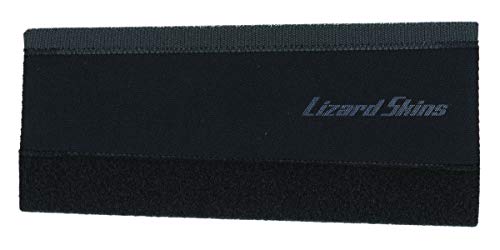


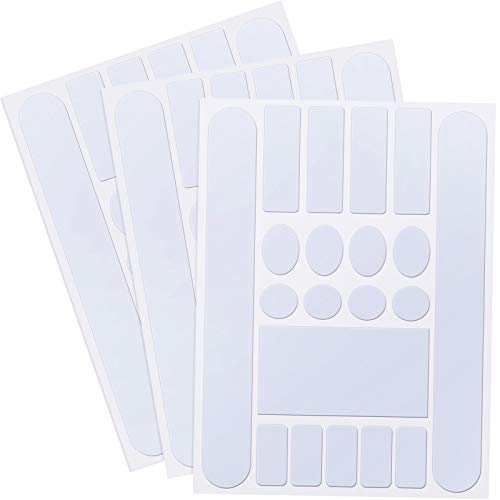

We picked these by comparing materials, coverage, fastening, how well they fit different frame shapes and how riders rate their noise reduction over time. Lizard Skins makes one of the most popular neoprene protectors; ribbed silicone options give the quietest ride if they suit your frame.
How to fit a chainstay protector
- Clean the chainstay with soapy water and then isopropyl alcohol to remove grease.
- Shift to the smallest rear cog to see where the chain sits.
- Wrap or stick the protector from the front of the chainstay backwards, keeping it clear of the chainring and derailleur.
- For wraps, have the Velcro closure on the underside so the chain doesn’t catch on it.
- Ride a bumpy section and listen; add extra protection where you still hear slap.
Frequently asked questions
Do I need a chainstay protector on a carbon bike?
Yes, especially on carbon. Chain slap can damage the carbon layers and is expensive to repair.
Can I use old inner tube as a protector?
Yes, a strip of old tube secured with zip ties is a classic cheap fix, though it is less durable and doesn’t look as clean.
Why is my bike still noisy with a protector?
Check that your derailleur clutch is on, the chain is the right length and cables are not rattling inside the frame.
Keep reading

Hi, I am Emam Hasan — founder and editor of BrokeMountain. I oversee this blog’s hiking, camping and outdoor gear guides, making sure every article is well-researched, accurate and genuinely helpful for your time on the trail. Enjoy it!