
Quick answer: a hardtail (front suspension only) is the best-value way into mountain biking. It is lighter, simpler and cheaper to maintain than a full-suspension bike, and it teaches good riding skills. For real trail riding, choose an aluminium hardtail from an established brand with hydraulic disc brakes, an air fork with 100–130 mm of travel, a 1x drivetrain and modern trail geometry. Budget hardtails from department stores are fine for paths, gravel and gentle trails.
BrokeMountain is reader-supported. We may earn a commission when you buy through links on this page, at no extra cost to you. Learn more.
Why choose a hardtail?
- Value: without a rear shock and pivots, more of your money goes to the fork, brakes and wheels.
- Low maintenance: fewer bearings and no rear shock to service.
- Efficiency: great for climbing, long rides and bikepacking.
- Skills: a hardtail rewards smooth line choice and body position.
What to look for
| Part | Budget / casual | Trail-ready |
|---|---|---|
| Frame | Steel or aluminium, upright fit | Aluminium or steel with trail geometry (head angle 65–67°) |
| Fork | Coil, 60–80 mm | Air, 100–140 mm, with lockout |
| Brakes | Mechanical disc | Hydraulic disc |
| Gearing | 3x or 2x, 7–8 speed | 1x, 10–12 speed |
| Wheels | 26 or 27.5 in | 29 in or 27.5 in on small sizes |
| Extras | Kickstand, reflectors | Dropper-post routing, tubeless-ready wheels |
Trail hardtails worth looking at
These long-running models from established brands are a good benchmark. Check current specs and prices with dealers.
- Trek Marlin and Roscoe: entry hardtails to playful trail hardtails.
- Specialized Rockhopper and Fuse: XC to trail hardtails with good sizing.
- Giant Talon and Fathom: value hardtails from Giant.
- Marin San Quentin: an aggressive, fun trail hardtail.
- Kona Honzo and Ragley, Cotic, Nukeproof: well-loved “hardcore hardtails” for technical trails.
Our picks
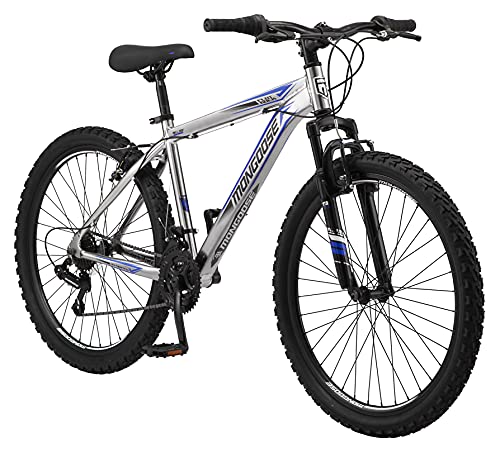


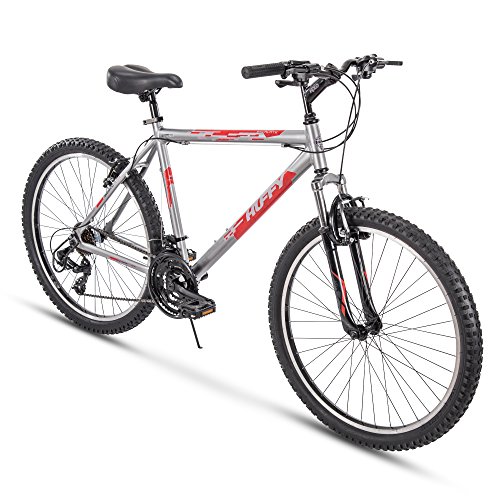
The bikes in this table are budget hardtails from Mongoose, Huffy, Eastern and others. They are affordable, widely available and fine for paths, fire roads, gravel and gentle trails, especially for occasional riders and teenagers. If you plan to ride rough, technical trails regularly, the trail hardtails listed above are a better long-term buy.
Getting the most from a hardtail
- Set tyre pressure a little lower for comfort and grip (run tubeless if possible).
- Add a dropper post: it is the best upgrade for confidence on descents.
- Stand up with relaxed knees and elbows on rough ground; let the bike move under you.
- Keep the fork serviced and set the air pressure for your weight.
Frequently asked questions
Are hardtails good for beginners?
Yes. They’re affordable, easy to maintain and help you learn good technique.
Hardtail or full suspension?
Hardtail for value, low maintenance and smoother trails; full suspension for comfort and speed on rough, technical trails.
Can a hardtail handle jumps and drops?
Trail hardtails can handle moderate jumps and drops. Budget department-store hardtails are not built for them.
Keep reading

Hi, I am Emam Hasan — founder and editor of BrokeMountain. I oversee this blog’s hiking, camping and outdoor gear guides, making sure every article is well-researched, accurate and genuinely helpful for your time on the trail. Enjoy it!


