
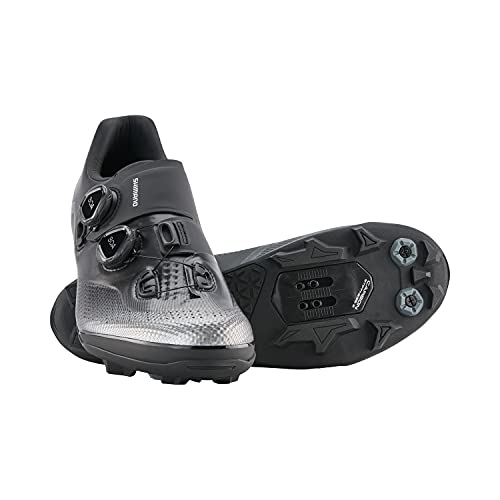
Quick answer: XC race shoes are stiff-soled clipless shoes that transfer power efficiently and save weight. Look for a carbon or carbon-composite sole, a precise closure (a BOA dial or ratchet), a 2-bolt SPD-compatible cleat mount and enough tread to run up steep sections when you have to dismount.
Shoes are your connection to the pedals, so the right pair makes a real difference to comfort and speed.
What to Look For
- Sole stiffness: stiffer soles transfer more power; slightly flexible soles are easier to walk in.
- Closure: dials allow fine adjustment on the move; laces and Velcro are cheaper.
- Cleat compatibility: 2-bolt cleats (SPD-style) for MTB pedals.
- Tread: rubber lugs and toe-spike mounts help on hike-a-bike sections.
- Fit: snug heel, room for toes; some brands offer wide fits.
Our Picks




XC Shoes vs Trail Shoes
| XC race shoe | Trail / enduro clipless shoe | |
|---|---|---|
| Stiffness | Very stiff | Moderate |
| Weight | Light | Heavier |
| Walking grip | Limited | Better |
| Protection | Minimal | Toe and ankle protection |
Fit and Setup
- Try shoes on in the afternoon with your cycling socks.
- Set cleats under the ball of your foot to start, then fine-tune.
- Practise clipping in and out on grass before hitting the trails.
FAQ
Do I need clipless shoes for XC?
Most XC racers use them for efficiency, but flat pedals with good shoes are fine for recreational riding.
Are road shoes OK for mountain biking?
No. Road cleats protrude and road soles have no grip for walking.
How tight should cycling shoes be?
Snug at the heel and midfoot with toe wiggle room. Your feet swell on long rides.
Related: Flat pedals · XC tyres

Hi, I am Emam Hasan — founder and editor of BrokeMountain. I oversee this blog’s hiking, camping and outdoor gear guides, making sure every article is well-researched, accurate and genuinely helpful for your time on the trail. Enjoy it!


