Quick answer: hydraulic disc brakes give a mountain bike stronger, smoother and more consistent stopping power than mechanical brakes, with less hand effort. For most riders, a reliable 2-piston brake such as the Shimano MT200 is a big upgrade from cable discs. If you ride steep trails, weigh more or ride enduro, choose a 4-piston brake with 180–203 mm rotors. Check your mounts, rotor sizes and brake fluid type before you buy.
BrokeMountain is reader-supported. We may earn a commission when you buy through links on this page, at no extra cost to you. Learn more.
Hydraulic vs mechanical disc brakes
Mechanical disc brakes use a steel cable to push the pads. They are cheap and easy to fix on the trail, but cable stretch and friction mean you need more lever force and regular adjustment. Hydraulic brakes use sealed fluid to move the pistons. The result is more power for less effort, better modulation (fine control over how hard you brake) and automatic pad adjustment as the pads wear.
| Mechanical disc | Hydraulic disc | |
|---|---|---|
| Power | Moderate | High |
| Lever feel | Firmer pull, can feel vague | Light, consistent |
| Pad adjustment | Manual | Automatic |
| Trail repairs | Easy | Needs a bleed kit |
| Price | Lower | Higher, but budget sets are now affordable |
What to look for
2-piston or 4-piston
Two-piston calipers suit cross-country, trail and lighter riders. Four-piston calipers spread the pad force over a larger area, giving more power and better heat management on long descents. If you ride big hills, ride enduro or weigh over about 90 kg with gear, 4-piston brakes are worth the extra cost.
Rotor size
Bigger rotors add leverage and shed heat better. 160 mm is common on XC bikes, 180 mm is a good all-round trail size, and 200–203 mm suits enduro and downhill. Check the maximum rotor size your fork and frame allow.
Mounting standard
Most modern MTBs use post mount on the fork and either post mount or flat mount at the rear. Older or budget frames may use IS mount, which needs an adaptor. Make sure any brake set includes, or works with, the adaptors you need.
Brake fluid
Shimano and many budget brands use mineral oil, which is less corrosive and easier to handle. SRAM, Hayes and some others use DOT fluid. The two are never interchangeable; the wrong fluid will destroy the seals.
Pre-bled sets and hose length
Many budget sets come pre-bled with long hoses so you can fit them without bleeding. Check the rear hose is long enough for your frame, especially on larger or full-suspension bikes.
Our picks
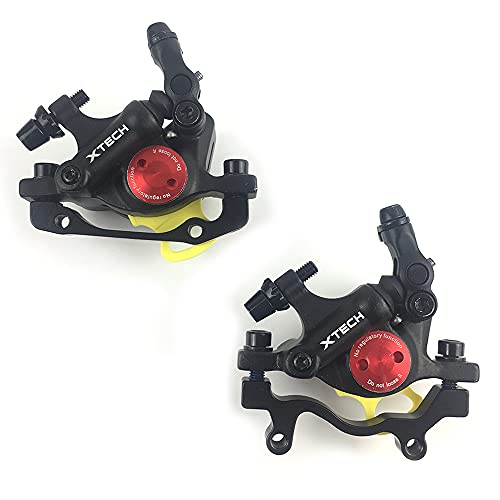


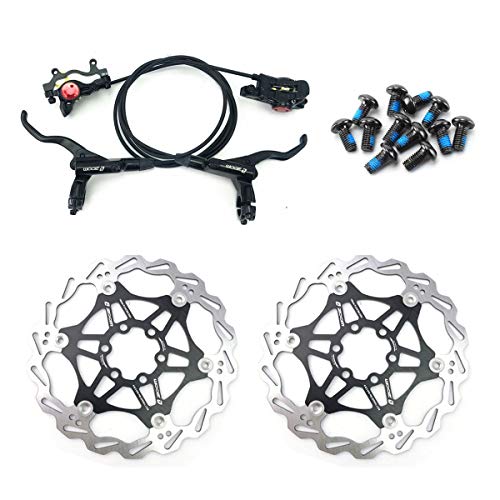
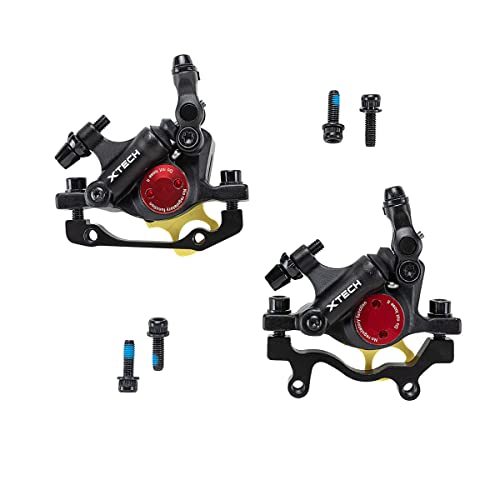


We compared these sets on caliper design, rotor sizes included, fluid type, ease of installation and owner reports about bleeding and long-term reliability. The Shimano MT200 is the best-known entry-level brake and parts are easy to find. The Zoom, Bucklos and other budget sets are popular cheap upgrades from cable brakes, but quality control varies more, so be prepared to bleed or align them properly.
Installation tips
- Fit and torque the rotors first (6-bolt or Centerlock), keeping oil and grease off the braking surface.
- Mount the caliper loosely, squeeze the lever, then tighten the bolts so the caliper centres on the rotor.
- Bed in new pads: do 10–20 firm stops from moderate speed on flat ground before riding trails.
- If the lever feels spongy, the brake needs a bleed; check the manufacturer’s guide for your fluid type.
Frequently asked questions
Are hydraulic brakes worth it on a cheap mountain bike?
Yes. A budget hydraulic set is one of the most noticeable upgrades you can make, especially for riders with smaller hands or on longer descents.
How often do hydraulic brakes need bleeding?
Usually once a year for regular riders, or when the lever feels soft or the bite point moves.
Can I mix brands of pads and rotors?
Often yes, as long as the pad shape matches the caliper and the rotor thickness is within spec. Stick to one pad compound per brake.
Resin or metallic pads?
Resin (organic) pads are quieter and bite well in the dry. Metallic (sintered) pads last longer and work better in wet and muddy conditions.
Keep reading

Hi, I am Emam Hasan — founder and editor of BrokeMountain. I oversee this blog’s hiking, camping and outdoor gear guides, making sure every article is well-researched, accurate and genuinely helpful for your time on the trail. Enjoy it!