Quick answer: building a mountain bike from a bare frame lets you choose every part, but it usually costs more than buying a complete bike. It makes the most sense when you already have good parts from an old bike, want a specific combination you can’t buy off the shelf, or want to learn mechanics. Choose a frame that matches your riding (XC, trail, enduro), uses current standards (Boost spacing, tapered head tube, internal dropper routing) and comes from a brand with a good warranty.
Frame build vs complete bike
| Frame build | Complete bike | |
|---|---|---|
| Cost | Usually higher unless reusing parts | Lower; brands buy parts in bulk |
| Choice | Every part your choice | Limited to set builds |
| Skills | Need tools and mechanical knowledge (or a shop) | Ready to ride |
| Satisfaction | High: a bike made exactly for you | Convenient |
Choose the right frame type
- Hardtail: simple, affordable, low maintenance. Great for XC, bikepacking and a first build.
- Short-travel full suspension (100–130 mm): XC and down-country riding.
- Trail (130–150 mm): the most versatile all-round choice.
- Enduro (160–180 mm): for steep descents and bike parks.
Standards to check
| Part | What to look for |
|---|---|
| Head tube | Tapered (1 1/8″ to 1.5″) for modern forks |
| Rear spacing | Boost 148 mm (most current wheels and hubs) |
| Bottom bracket | Threaded BSA 73 mm is easiest to work on |
| Seatpost | 30.9 or 31.6 mm with internal dropper routing |
| Brake mount | Post mount or flat mount; check max rotor size |
| Wheel size | 29, 27.5 or mixed; check tyre clearance |
| Shock (full-sus) | Size (eye-to-eye and stroke) and whether one is included |
Where to find a good frame
- Frame-only options from major brands: many brands sell some models as frame-only (often full suspension with shock included).
- Smaller and boutique brands: hardtail makers such as Ragley, Cotic, Stanton, Chromag and others sell steel and aluminium frames aimed at builders.
- Used frames: look for frames from riders upgrading; inspect for cracks, worn pivots and seized bearings.
- Direct-from-factory carbon: cheaper, but quality, warranty and safety vary widely. Buy only from sellers with a strong track record.
Tools you will need
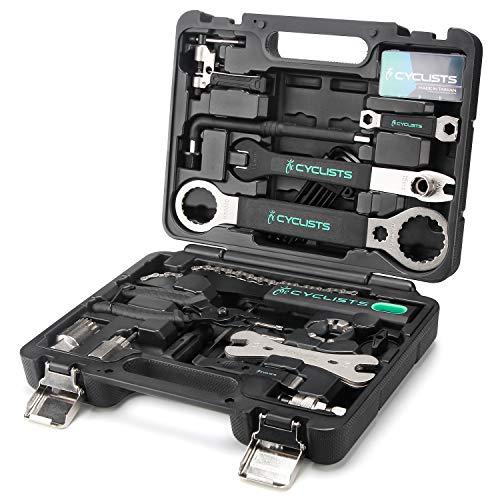
- Torque wrench and hex/Torx bits
- Bottom bracket and cassette tools
- Headset press (or a shop to fit the headset)
- Cable/hose cutters and a bleed kit for hydraulic brakes
- Chain tool and a quick link plier
- Star-nut setter or compression plug for the steerer
Rough build budget
Even with mid-range parts, the components often add up to more than the frame. A typical trail build needs a fork, wheels, tyres, drivetrain, brakes, dropper post, cockpit (bar, stem, grips), saddle and pedals. Price everything before buying the frame.
Frequently asked questions
Is it cheaper to build a mountain bike?
Usually not, unless you already own good parts or find great deals.
Can a beginner build a bike?
Yes, with patience, good tools and online guides. A shop can help with tricky jobs like headset pressing and brake bleeding.
Steel, aluminium or carbon frame?
Steel rides smoothly and lasts well; aluminium is light and affordable; carbon is lightest and most expensive.
Keep reading
- Best Mountain Bike Wheels, Rims and Hubs
- Best Hydraulic Disc Brakes
- Best Carbon Mountain Bikes for the Money

Hi, I am Emam Hasan — founder and editor of BrokeMountain. I oversee this blog’s hiking, camping and outdoor gear guides, making sure every article is well-researched, accurate and genuinely helpful for your time on the trail. Enjoy it!