
Quick answer: the best mountain bike puncture repair kit depends on your tyres. Tubeless riders should carry a plug kit, such as a Dynaplug, a Lezyne Tubeless Kit or a classic “bacon strip” kit, for holes too big for sealant to close, plus a spare tube for the worst cases. Riders with inner tubes need a spare tube, a glue-on patch kit and tyre levers. Whatever you run, add a mini pump or CO2 inflator and a tyre boot, and you can fix most flats on the trail in a few minutes.
BrokeMountain is reader-supported. We may earn a commission when you buy through links on this page, at no extra cost to you. Learn more.
How we chose: we haven’t tested these kits in person. Our picks are based on manufacturer information, published reviews and workshop advice from tool makers such as Park Tool.
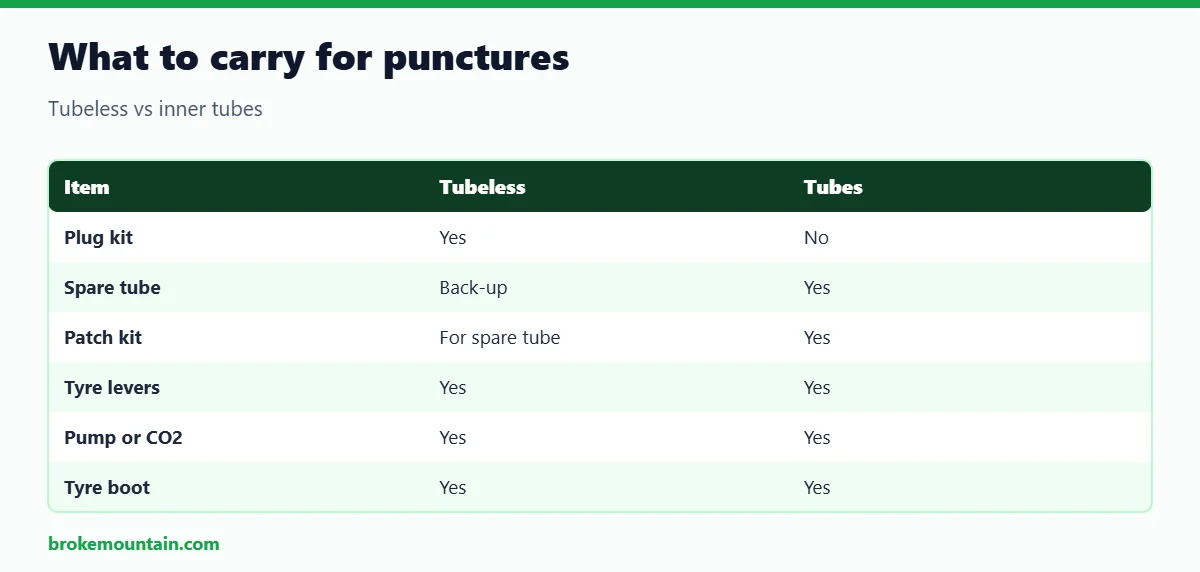
What to carry on every ride
| Item | Tubeless riders | Riders with tubes |
|---|---|---|
| Plug kit (tool and plugs) | Yes | No |
| Spare tube | Yes, as a back-up | Yes |
| Patch kit | Useful for the spare tube | Yes |
| Tyre levers | Yes | Yes |
| Mini pump or CO2 | Yes | Yes |
| Tyre boot | Yes | Yes |
| Valve core tool | Useful | No |
A puncture repair kit is only part of a trail kit. Our guide to mountain bike tool kits covers the multi-tool, chain tool and quick link that should go with it.
Types of puncture repair kit
Bacon strip plug kits
The classic tubeless repair is a sticky, rope-like rubber strip, often called a “bacon strip”. A fork-shaped tool pushes a folded strip into the hole, and the strip and sealant together seal it. These kits are cheap and work well on small and medium holes. Some kits also include a reamer to tidy the hole before you insert the plug.
Dynaplug-style plug tools
Dynaplug uses a different design: a small plug with a pointed metal tip that you push into the hole through a tube. The tip anchors the plug inside the tyre and the rubber seals the hole. Dynaplug started out making repair tools for motorbikes and cars before adapting the idea for bicycles. In road.cc’s review of the Dynaplugger, the reviewer reports a plugged sidewall cut still holding about 200 miles and a month later. Dynaplug kits cost more than bacon strip kits, but many riders find them quicker to use.
Larger plug kits
Some holes are too big for standard 1.5 mm strips. Lezyne’s Pro Tubeless Kit, covered by Bikepacking.com, includes both 1.5 mm and thicker 3.5 mm plugs, plus a knife, valve core remover and CO2 inflator in one housing. Thicker plugs are useful for longer cuts that a single thin strip can’t fill.
Patch kits for tubes
For inner tubes, there are two types of patch. Park Tool explains that glue-on patches such as its VP-1 kit are less convenient than pre-glued patches but much more durable when fitted properly, because the patch bonds chemically to the tube. Park Tool also notes that tubeless tyre bodies can’t be fixed with stick-on patches; you need a plug tool instead.
What to look for in a puncture repair kit
- Your tyre type: plugs for tubeless, patches and a spare tube for tubes.
- Plug sizes: a mix of thin and thick plugs covers more types of damage.
- Storage: kits that fit in a bar end, clip to a bottle cage or slot into frame storage are easier to carry on every ride.
- Ease of use: a tool with a good grip matters when your hands are cold or muddy.
- Refills: check that spare plugs or patches are easy to buy.
The best mountain bike puncture repair kits
1. Dynaplug Racer or Racer Pro: best tubeless plug tool
Dynaplug’s compact tools carry ready-loaded plugs in insertion tubes, so you can fix a hole quickly without threading strips onto a fork. Reviewers such as The Loam Wolf rate the Racer Pro highly for trailside speed. Spare plugs are sold separately, including larger “Megaplugs”.
- Good for: tubeless riders who want the fastest repair.
- Watch out for: higher price than bacon strip kits.
Check Dynaplug prices on Amazon
2. Lezyne Pro Tubeless Kit: best all-in-one tubeless kit
The Pro Tubeless Kit packs two plug sizes, an insertion tool, a knife, a valve core remover and a CO2 inflator into one aluminium housing. It’s a good choice for riders who want everything for a tubeless repair in one place. Lezyne also sells a simpler, cheaper Tubeless Kit.
- Good for: riders who want plugs and inflation in one kit.
- Watch out for: you’ll still need CO2 cartridges.
Check Lezyne tubeless kit prices on Amazon
3. Muc-Off Puncture Plugs: easy to carry
Muc-Off’s plug kit stores the tool and plugs in a compact holder that can be carried on the bike. It’s a tidy option for riders who want a bacon strip system that’s always with them.
- Good for: riders who want a neat, mountable plug kit.
- Watch out for: check how it mounts on your bike before buying.
Check Muc-Off plug kit prices on Amazon
4. Bacon strip kits: best budget tubeless repair
Simple kits with a fork tool, reamer and a handful of sticky strips cost very little and work well on small holes. They’re a good starting point, or a cheap spare to keep in a second bag.
- Good for: riders on a budget and as a back-up kit.
- Watch out for: the tool can pull the strip back out if you’re not careful.
Check bacon strip kit prices on Amazon
5. Park Tool VP-1 Vulcanizing Patch Kit: best for tubes
For riders with inner tubes, and for patching the spare tube tubeless riders carry, a glue-on patch kit is the most reliable option. Park Tool’s VP-1 includes round and oval patches, vulcanizing fluid and sandpaper in a small case.
- Good for: tube riders and repairing spare tubes at home.
- Watch out for: once opened, the glue can dry out, so check it before a big ride.
Check Park Tool patch kit prices on Amazon
Quick comparison
| Kit | Tyre type | Strength | Trade-off |
|---|---|---|---|
| Dynaplug | Tubeless | Fast, pre-loaded plugs | Price |
| Lezyne Pro Tubeless Kit | Tubeless | Two plug sizes plus CO2 head | Needs cartridges |
| Muc-Off Puncture Plugs | Tubeless | Neat, mountable | Check fit |
| Bacon strip kit | Tubeless | Cheap | Fiddlier to use |
| Park Tool VP-1 | Tubes | Durable patches | Glue can dry out |
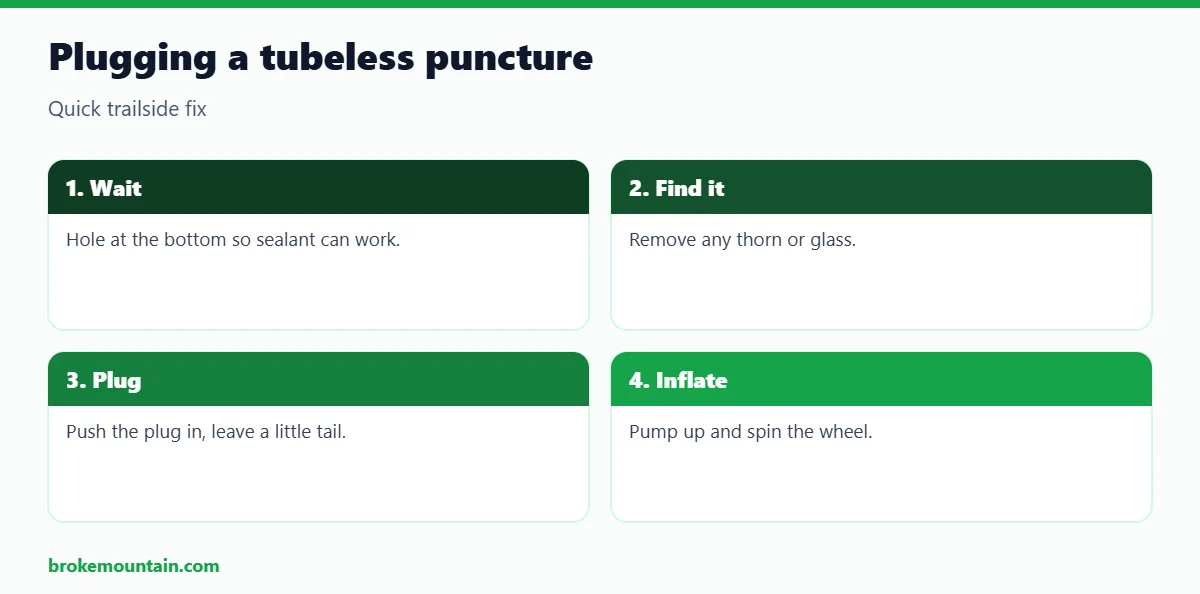
Fixing a tubeless puncture step by step
- Let the sealant work first. Turn the wheel so the hole is at the bottom, where the sealant pools, and give it a moment. Many small holes seal on their own.
- Find the hole if it keeps hissing. Remove any thorn or glass.
- Insert a plug with your tool, leaving a little sticking out.
- Pull the tool out carefully so the plug stays in.
- Reinflate and spin the wheel so sealant coats the plug.
- Check at home, top up sealant and keep an eye on the repair over the next few rides.
Our guide to tubeless sealant explains how much to use and how often to top up.
Patching a tube step by step
- Remove the tube and find the hole. Pump it up a little and listen, or pass it near your face to feel the air.
- Check the tyre for the thorn or glass that caused it, or it’ll puncture again.
- Roughen the area around the hole with the sandpaper.
- Spread a thin layer of glue, larger than the patch, and let it dry until it’s no longer shiny.
- Press the patch on firmly, holding it by the edges.
- Refit the tube inside the tyre before inflating, so the patch isn’t stretched.
Dealing with sidewall cuts
Large cuts, especially in the sidewall, may be too big for plugs or sealant. A tyre boot, a tough patch placed inside the tyre over the cut, stops the tube bulging out. Fit the boot, then a tube, and ride home gently. In an emergency, a folded energy bar wrapper can work as a temporary boot. A tyre with a big sidewall cut usually needs replacing.
Inflating after a repair
Once the hole is fixed, you need air. A mini pump gives you unlimited air but takes effort, while a CO2 inflator is very fast but each cartridge is single use. If you run latex sealant, be aware that CO2 can make it clump, so many riders let the CO2 out at home and refill with a pump. Our mini pump guide compares the options.
Building a puncture kit for longer rides
For big days out, bikepacking trips and remote trails, carry a bit more:
- Two sizes of plugs, or extra plugs.
- A spare tube that fits your tyre size.
- A tyre boot and a few patches for the spare tube.
- A small bottle of sealant to top up a tyre that’s lost a lot.
- A spare valve core and a valve core tool.
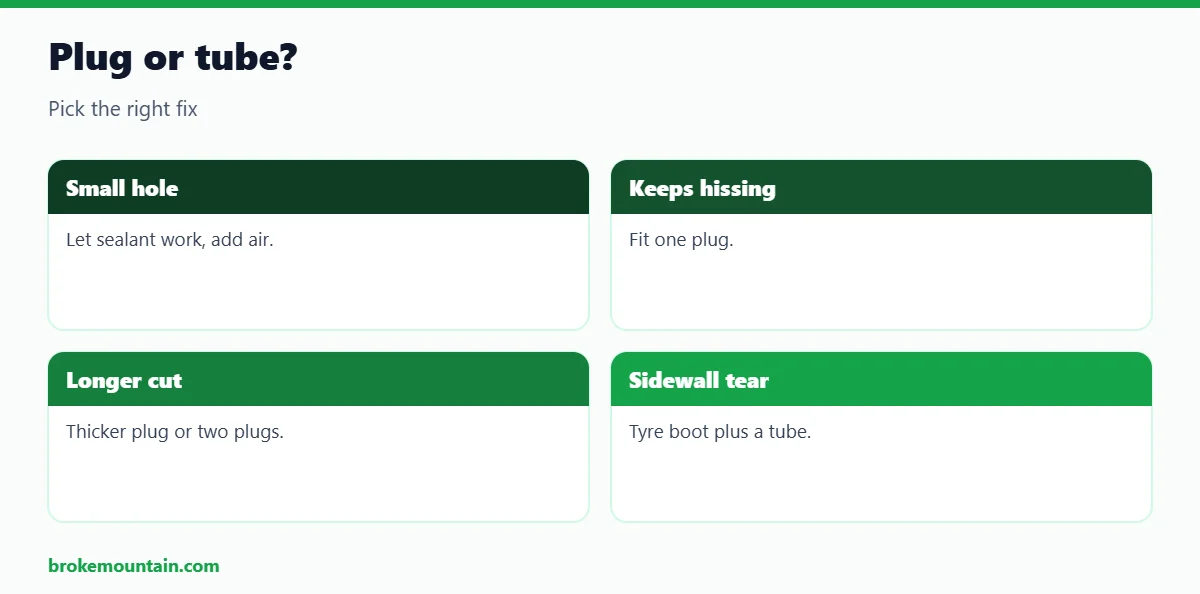
Plug or tube? Choosing the right fix on the trail
When a tubeless tyre goes flat, it helps to have a simple order of attack:
- Small hole, still holding some air: let the sealant try first, then add air.
- Hole keeps hissing: plug it. One plug fixes most thorn and stone holes.
- Longer cut: use a thicker plug, or two plugs side by side.
- Big sidewall tear or damaged bead: fit a tyre boot and a tube.
Before fitting a tube into a tubeless tyre, pull out any thorns and check for plug tips sticking through the casing, as these can puncture the tube. Remove the tubeless valve and use the tube’s own valve.
Practise at home first
The side of a trail in the rain isn’t the place to learn. Practise with an old tyre at home: push a plug into a hole made with an awl, change a tube, and fit a tyre boot. You’ll learn how hard to push the plug tool, how much tail to leave, and how long your pump takes to reach riding pressure. It’s also a good time to check that the glue in your patch kit hasn’t dried up and that your CO2 head fits your valves.
Puncture kits by riding style
- Cross-country racing: a small plug tool and a CO2 inflator, kept in frame storage or a bar end to save weight.
- Trail riding: plug kit, mini pump, tyre levers, spare tube and a tyre boot.
- Enduro and bike parks: add thicker plugs and a spare valve core, as rocky trails cause bigger cuts.
- E-bikes: heavier tyres and higher loads make a good pump and thicker plugs even more useful.
Preventing punctures
Good habits reduce how often you need your kit. Keep sealant topped up, run sensible tyre pressures, and consider tougher casings if you ride rocky trails. Our guides to tyre pressure and puncture-resistant tyres cover both.
Frequently asked questions
Do I need a spare tube if I ride tubeless?
Yes. A large sidewall cut, a damaged valve or a tyre that won’t reseal may need a tube to get you home.
Are tubeless plugs permanent?
Many last for the life of the tyre. Check the repair after a few rides and add sealant if it weeps.
Can I patch a tubeless tyre with a tube patch?
Not from the outside. Park Tool notes that tubeless tyre bodies can’t be repaired with stick-on patches; use a plug instead.
Are self-adhesive patches any good?
They’re quick and handy on the trail, but glue-on patches usually last longer. Many riders use self-adhesive patches as a temporary fix.
How many plugs should I carry?
At least three or four, in more than one size if your kit allows. Big cuts sometimes need two plugs, and you may get more than one puncture on a long, rocky ride.
Where should I carry my kit?
Ideally on the bike, in a bar end, frame storage or a saddle bag, so you never leave without it.
Keep reading

Hi, I am Emam Hasan — founder and editor of BrokeMountain. I oversee this blog’s hiking, camping and outdoor gear guides, making sure every article is well-researched, accurate and genuinely helpful for your time on the trail. Enjoy it!


