
Quick answer: new wheels are one of the best upgrades for a mountain bike. Lighter, stronger wheels with wider rims improve acceleration, grip and comfort. For trail riding, look for a 29 mm or so internal rim width, tubeless-ready rims, a reliable hub with quick engagement, and the right axle standard for your bike (usually Boost 110/148 mm thru-axles on modern bikes). If you are on a tight budget, replacing only the rim or rebuilding a damaged wheel can make sense.
BrokeMountain is reader-supported. We may earn a commission when you buy through links on this page, at no extra cost to you. Learn more.
Know your standards before you buy
| Spec | What to check |
|---|---|
| Wheel size | 26, 27.5 or 29 in, matching your frame and fork |
| Front axle | Quick release (9×100), 15×100 or Boost 15×110 mm |
| Rear axle | Quick release (10×135), 12×142 or Boost 12×148 mm (Super Boost 157 on some bikes) |
| Freehub | Shimano HG, Shimano Micro Spline or SRAM XD, to match your cassette |
| Brake rotor mount | 6-bolt or Centerlock |
| Tubeless | Tubeless-ready rims and tape make set-up easier |
What to look for
Rim width
Modern trail rims are typically 25–30 mm internal width. Wider rims support wider tyres better, so you can run lower pressure without the tyre squirming. XC wheels are often around 25 mm; enduro wheels around 30 mm.
Rim material
Aluminium rims are affordable, tough and easy to straighten. Carbon rims are lighter and stiffer, and many now come with lifetime warranties, but they cost more.
Hub engagement
Engagement is how quickly the hub picks up when you start pedalling. Faster engagement helps on technical climbs. Budget hubs might have 18–24 points of engagement; premium hubs often have 50–100+.
Spokes and build quality
More spokes (usually 28–32) make wheels stronger. A good machine-built or hand-built wheel with even spoke tension will stay true much longer.
Weight
A decent alloy trail wheelset weighs about 1,800–2,100 g; lighter XC sets can be under 1,600 g. Weight at the rim affects acceleration most.
Our picks

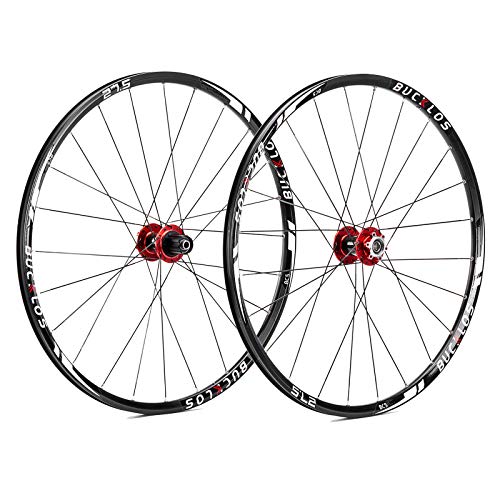

These picks include affordable replacement rims and budget wheelsets that suit riders upgrading or replacing worn wheels on entry-level bikes. The WTB SX19 is a tough, widely used budget rim. For higher-end riding, consider wheelsets from DT Swiss, Industry Nine, Hope or Shimano, sold at bike shops and specialist retailers.
Wheel care
- Check spoke tension and true the wheel if it wobbles.
- Keep hub bearings clean and replace them when they feel rough.
- Refresh tubeless sealant every 2–6 months.
- Inspect rims for dents and cracks after hard impacts.
Frequently asked questions
Is upgrading wheels worth it?
Yes. Lighter, stronger and wider wheels improve how the bike accelerates, grips and handles.
Can I put 29-inch wheels on a 27.5-inch bike?
Usually not; there won’t be enough frame and fork clearance, and it changes geometry.
How long do mountain bike wheels last?
A well-built wheel can last many years. Rims wear out faster if you use rim brakes, which is rare on modern MTBs.
Keep reading

Hi, I am Emam Hasan — founder and editor of BrokeMountain. I oversee this blog’s hiking, camping and outdoor gear guides, making sure every article is well-researched, accurate and genuinely helpful for your time on the trail. Enjoy it!


