
Quick answer: tubeless sealant sits inside your tyre and plugs small punctures automatically, usually before you notice them. Latex-based sealants (such as Orange Seal and Stan’s) seal fast and are the most common; latex-free sealants last longer and are easier to clean. Use about 60–90 ml in a 27.5 or 29-inch trail tyre, more for wide or plus tyres, and top up every 2–6 months depending on the brand and climate.
BrokeMountain is reader-supported. We may earn a commission when you buy through links on this page, at no extra cost to you. Learn more.
Types of tubeless sealant
| Type | Pros | Cons |
|---|---|---|
| Latex-based | Seals quickly, widely available, affordable | Dries out in 2–4 months; can clump into “boogers” |
| Latex-free / synthetic | Lasts longer, easy to clean, won’t dry into clumps | Can seal larger holes slower, often pricier |
| Particle-filled | Fibres or flakes help plug bigger cuts | Can clog valves |
| Race / fast-drying | Quick seal on the move | Shorter life |
What to look for
- Sealing speed: how quickly it stops air escaping from a thorn or small cut.
- Longevity: how many months before you need to top up.
- Temperature range: some sealants freeze or dry faster in hot or cold weather.
- Compatibility: most sealants work with all tyres and rims; check if your rim maker recommends a particular type, as some sealants can corrode certain rim tapes or CO₂ can affect latex.
- Ease of cleaning: latex-free formulas wash out easily with water when swapping tyres.
How much sealant do I need?
| Tyre size | Amount |
|---|---|
| XC 29 × 2.2–2.4 | 60–80 ml |
| Trail 29 × 2.4–2.5 | 80–100 ml |
| Enduro / DH 2.5–2.6 | 100–120 ml |
| Plus 2.8–3.0 | 120–150 ml |
| Fat bike 4.0+ | 150–250 ml |
Our picks


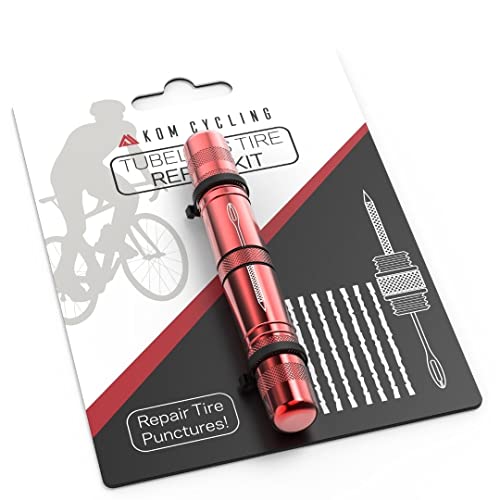


We chose these sealants for sealing performance, longevity, cleanliness and rider feedback. Orange Seal Endurance is a long-lasting favourite; Orange Seal Regular seals faster. Muc-Off and milKit sealants are known for being easy to work with, and the KOM and WPL options are good value.
How to add sealant
- Remove the valve core with a valve tool.
- Rotate the wheel so the valve is at 4 or 8 o’clock, then inject sealant through the valve with a syringe or the bottle nozzle.
- Refit the core and inflate to seat the tyre.
- Spin and shake the wheel to spread sealant around the casing, then ride.
- Check the level every couple of months with a dipstick or by removing a section of tyre.
Frequently asked questions
How often should I add tubeless sealant?
Every 2–6 months. In hot, dry climates, more often.
Can I mix different sealants?
Best not to. Some latex and latex-free formulas react and clump. Clean out old sealant before switching.
What size hole will sealant fix?
Most sealants handle thorns and small cuts up to 3–6 mm. Larger cuts need a tubeless plug.
Keep reading

Hi, I am Emam Hasan — founder and editor of BrokeMountain. I oversee this blog’s hiking, camping and outdoor gear guides, making sure every article is well-researched, accurate and genuinely helpful for your time on the trail. Enjoy it!


