Quick answer: for Shimano Deore brakes, choose the correct pad shape first, then the compound. Deore 2-piston calipers (M6000 and M6100) use Shimano’s 2-piston pad shape (for example the B05S resin pad), while Deore 4-piston calipers (M6120) use the 4-piston D-type shape (for example D03S resin or the finned N03A pad). Organic (resin) pads bite well, feel smooth and are quiet, which suits dry trails and lighter riders. Sintered (metal) pads last longer, handle heat on long descents and keep working in wet, gritty conditions. Genuine pads are the safest choice; good aftermarket pads from known brands can save money and last as long.
BrokeMountain is reader-supported. We may earn a commission when you buy through links on this page, at no extra cost to you. Learn more.
Check the pad shape first
Deore 2-piston calipers (M6000 and M6100) use Shimano’s 2-piston pad shape (for example the B05S resin pad), while Deore 4-piston calipers (M6120) use the 4-piston D-type shape (for example D03S resin or the finned N03A pad). The easiest way to confirm is to remove an old pad and compare its shape, or check the pad code in your brake’s manual or on the manufacturer’s compatibility chart. Pads that look “nearly” right will not fit or may rub.
Organic vs sintered vs semi-metallic
| Compound | Pros | Cons | Best for |
|---|---|---|---|
| Organic (resin) | Strong initial bite, quiet, gentle on rotors | Wear fast in wet and mud; can fade on long descents | Dry trails, XC, lighter riders |
| Sintered (metal) | Long life, heat-resistant, consistent in wet | Can be noisy; need longer bedding in | Wet climates, long descents, heavier riders |
| Semi-metallic | Balance of bite and durability | Middle ground on everything | All-round trail riding |
When to replace your pads
- The pad material (not including the backing plate) is thinner than about 1 mm, or roughly the thickness of the backing plate in total, depending on the maker’s guide.
- Braking feels weaker or the lever pulls further to the bar.
- You hear metal-on-metal scraping.
- Pads are contaminated with oil or brake fluid; contaminated pads cannot be saved.
Our picks


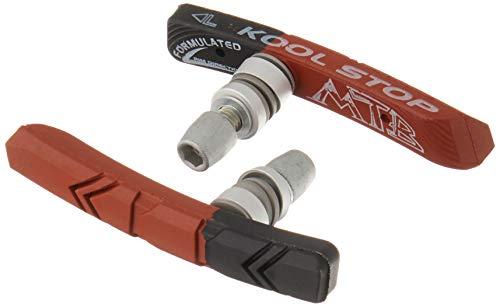
We chose these pads by checking shape compatibility, compound choice, owner reports on noise, bite and wear, and value per pair. Genuine pads are the benchmark. Brands like Kool Stop, Jagwire, Galfer and other well-reviewed options are good alternatives, while multi-pack budget pads are useful for riders who go through pads quickly. Always double-check the shape against your brake before ordering.
How to fit and bed in new pads
- Remove the wheel and the pad retaining pin or bolt.
- Push the pistons back gently with a plastic tyre lever, keeping them square.
- Fit the new pads and spring, refit the pin and its clip, then refit the wheel.
- Bed them in: ride at moderate speed and brake firmly to walking pace 10–20 times, then do a few harder stops. Avoid locking the wheel.
- Keep oil, chain lube and your fingers off the pads and rotor.
Frequently asked questions
How long do mountain bike brake pads last?
Anywhere from a few hundred to a few thousand kilometres, depending on compound, terrain, weather and riding style. Wet, gritty rides wear pads fastest.
Can I use sintered pads with any rotor?
Most modern rotors handle both, but some lightweight rotors are marked “resin only”. Check the rotor.
Why are my new pads squealing?
They may not be bedded in, the rotor may be contaminated, or the caliper may need realigning. Clean the rotor with isopropyl alcohol and bed in again.
Are cheap brake pads safe?
Pads from reputable brands are fine. Very cheap no-name pads can vary in quality, so check reviews and inspect them before fitting.
Keep reading

Hi, I am Emam Hasan — founder and editor of BrokeMountain. I oversee this blog’s hiking, camping and outdoor gear guides, making sure every article is well-researched, accurate and genuinely helpful for your time on the trail. Enjoy it!