
Quick answer: the best mountain bikes for heavy riders are ones whose published weight limit comfortably covers you, your gear and, for some brands, the bike itself. Many mainstream mountain bikes are rated around 300 lb (136 kg), but brands measure this differently, so always check the exact figure for the model. After that, look for strong 32-spoke wheels, four-piston hydraulic brakes with large rotors, air suspension you can set for your weight, and tough tyre casings. A well-built hardtail or trail bike from an established brand will be safer and last longer than a cheap department-store bike.
BrokeMountain is reader-supported. We may earn a commission when you buy through links on this page, at no extra cost to you. Learn more.
How we chose: we haven’t tested these bikes in person. This guide is based on manufacturers’ published weight limits and specifications, and on general workshop advice. Weight limits change between models and years, so always check the official figure for the exact bike you’re buying.
Step 1: check the weight limit, and what it includes
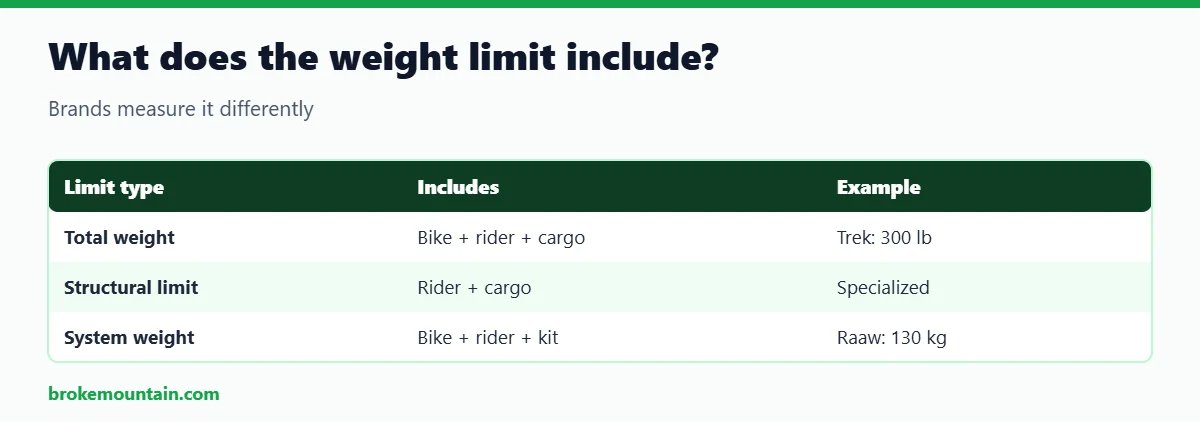
Every major brand publishes a weight limit, usually in the owner’s manual or on the bike’s spec page. The catch is that brands don’t all measure it the same way:
- Total weight including the bike: Trek’s spec pages for many mountain bikes, such as the Stache frameset, list a maximum total weight of 300 lb (136 kg) for the combined weight of bicycle, rider and cargo.
- Rider plus gear only: Specialized describes a structural weight limit for the combination of rider and cargo, and tells owners to check the user manual for each bike.
- System weight: some smaller brands use a “system weight”. For example, Raaw says its frames and components are guaranteed up to a system weight of 130 kg, which it defines as bike, rider and accessories such as a backpack.
So a “300 lb” limit can mean very different things. On a bike where the limit includes a 35 lb bike, the rider and gear can total only about 265 lb. Always do the maths for your own weight in riding kit, plus your backpack and water.
A worked example
Say you weigh 250 lb in your riding clothes, carry a 10 lb backpack with water and tools, and are looking at a 32 lb trail bike:
- If the limit is rider plus cargo: 250 + 10 = 260 lb. A 300 lb limit leaves a 40 lb margin.
- If the limit includes the bike: 250 + 10 + 32 = 292 lb. A 300 lb limit leaves only 8 lb, which is too close for comfort.
Aim for a comfortable margin rather than riding right at the limit, especially if you ride rough trails or jump.
Step 2: know what to look for
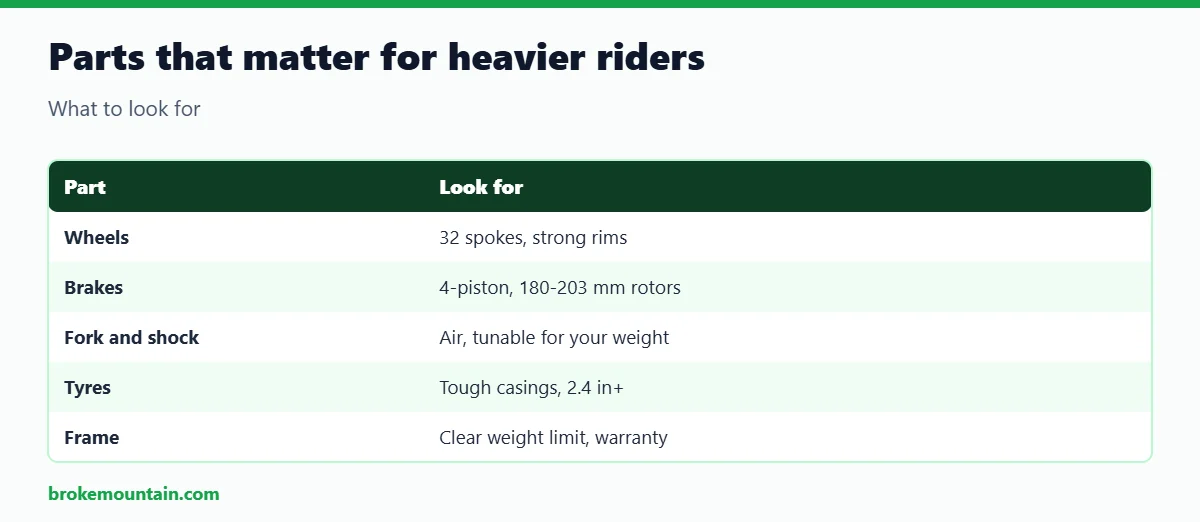
| Part | What to look for | Why it matters |
|---|---|---|
| Wheels | 32 spokes, strong rims about 30 mm wide | Less flex and fewer broken spokes |
| Brakes | Four-piston hydraulic, 180 to 203 mm rotors | More stopping power and less fade |
| Fork | Air spring you can set for your weight | Stops the fork diving or bottoming out |
| Rear shock | Air shock with enough pressure range, or a heavier coil spring | Correct sag and support |
| Tyres | Tough casings, 2.4 inches or wider | Fewer pinch flats and sidewall cuts |
| Frame | Established brand with a clear weight limit and warranty | Safety and support if something goes wrong |
| Contact points | Supportive saddle, wide bars, strong pedals | Comfort and control |
Hardtail, full suspension, e-bike or fat bike?
- Hardtail: fewer moving parts, strong and affordable. A great choice for most riders, especially on trails and paths.
- Full suspension: more comfortable on rough trails and easier on the joints. Choose an air shock and check the shock’s maximum pressure can give you the right sag.
- E-mountain bike: the motor makes climbing much easier. E-bikes are heavy, so check whether the limit includes the bike’s weight, and look for models with higher limits.
- Fat bike: big, low-pressure tyres feel very stable on snow, sand and paths. Budget fat bikes are heavy and use basic parts, so they suit relaxed riding more than steep trails.
The best mountain bikes for heavy riders
1. A hardtail from an established brand: best for most riders
A quality aluminium hardtail from a brand such as Trek, Specialized, Giant, Marin or Kona is the simplest, strongest choice. Look for one with 32-spoke wheels, hydraulic brakes and an air fork, and check its published limit. Our guide to hardtail mountain bikes covers good options.
- Good for: trail riding, fitness and commuting.
- Watch out for: entry-level forks may be too soft; air forks are easier to set up.
Check hardtail mountain bike prices on Amazon
2. A trail or enduro full-suspension bike: best for rough trails
Trail and enduro bikes are built for rougher riding, often with stronger frames, bigger brakes and tougher wheels than cross-country bikes. That makes them a good fit for heavier riders on technical trails. Check the published limit and the shock’s pressure range before buying.
- Good for: technical trails and riders who want more comfort.
- Watch out for: more parts to maintain, including pivot bearings and shock servicing.
Check full-suspension bike prices on Amazon
3. An e-mountain bike with a higher weight limit
Some e-mountain bikes are rated higher than standard bikes, which helps once you add the motor and battery. Compare the published limits carefully between brands, and remember to include the bike’s weight if the brand’s limit does.
- Good for: riders who want help on climbs and longer rides.
- Watch out for: heavy bikes and higher prices. Our guide to electric mountain bikes explains the options.
Check e-mountain bike prices on Amazon
4. Heavy-duty specialist bikes
A few specialist brands build bikes designed for heavier riders. For example, Zinn Cycles explains that most standard bikes are rated for riders in the 275 to 300 lb range, with some heavy-duty bikes rated up to 400 lb. Specialist bikes cost more but give a bigger safety margin.
- Good for: riders above most standard limits.
- Watch out for: higher prices and longer waits for custom builds.
5. Fat bikes: best for relaxed riding on snow and sand
Budget fat bikes are popular with heavier riders because their wide tyres feel stable and comfortable. They’re best for paths, beaches, snow and gentle trails rather than steep, technical riding. Check the weight limit and brakes carefully, as budget models vary.
- Good for: relaxed riding, snow and sand.
- Watch out for: heavy bikes with basic parts; upgrade brakes if you ride hills.
Check fat bike prices on Amazon
Quick comparison
| Option | Best for | Strength | Trade-off |
|---|---|---|---|
| Quality hardtail | Most riders | Strong, simple | Less comfort on rough trails |
| Trail/enduro full suspension | Rough trails | Comfort, tougher parts | More maintenance |
| E-mountain bike | Climbs, long rides | Motor help | Weight, price |
| Heavy-duty specialist | Above standard limits | Bigger safety margin | Price |
| Fat bike | Snow, sand, paths | Stable, comfortable | Heavy, basic parts |
Upgrades that make the biggest difference
- Brakes: four-piston brakes and larger rotors add stopping power. Our guide to hydraulic disc brakes covers the options.
- Brake pads: sintered or metal pads last longer and handle heat better.
- Wheels: a 32-spoke wheelset with strong rims; see our wheels guide.
- Tyres: tougher casings reduce flats and add support.
- Saddle: a supportive saddle sized for your sit bones; see our saddle guide.
- Pedals: strong flat pedals with good bearings.
Check four-piston brake prices on Amazon
Setting up your bike for your weight
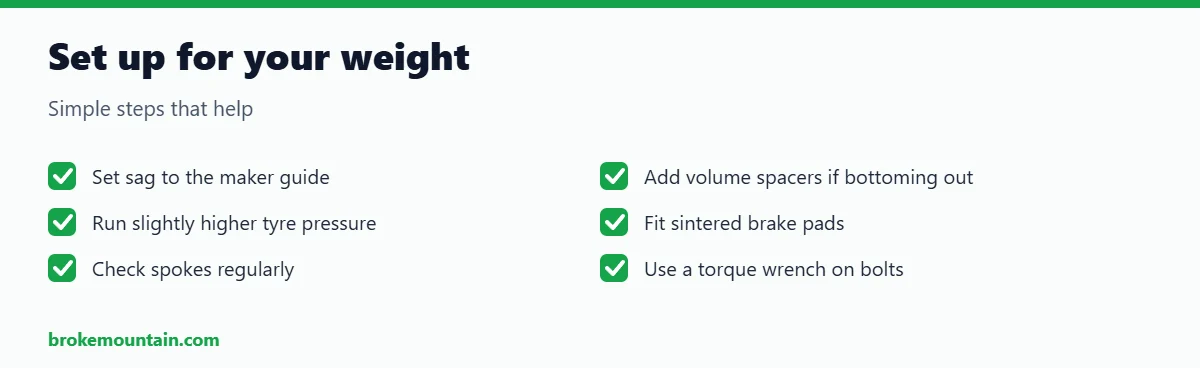
- Set suspension sag to the maker’s guide, often around 20 to 25% front and 25 to 30% rear on trail bikes. If you can’t reach the right sag within the pressure limit, ask a shop about a firmer spring or a different shock.
- Add volume spacers to air forks and shocks if you bottom out on big hits.
- Run slightly higher tyre pressures to avoid pinch flats; our tyre pressure guide explains how.
- Check spoke tension regularly and true wheels early.
- Use a torque wrench on stem, handlebar and seatpost bolts.
Carbon parts and weight limits
Some components, especially carbon handlebars, seatposts and saddles, have their own weight limits that may be lower than the frame’s. Specialized, for example, notes that if a bike has carbon components, riders should follow the component weight limit. Check the limits for any carbon parts you fit, and choose aluminium parts if you’re near the limit.
Fit and sizing for bigger riders
Weight and height don’t always go together, so size the bike by your height and inside leg first, using the brand’s size chart. A bike that fits well is more comfortable and puts less strain on your back, hands and knees. Then fine-tune the contact points: a wider handlebar can give more control and a more open chest, a shorter stem can make steering feel calmer, and a supportive saddle sized for your sit bones makes longer rides much more comfortable. Test ride if you can, and ask the shop to set the suspension for your weight before you leave.
Kit and protection
Good kit makes riding more comfortable at any size. Padded shorts or liners reduce saddle soreness, and gloves protect your hands. Many brands now make cycling clothing in extended sizes. A helmet that fits properly is essential, and knee pads are worth considering for trail riding. Carry a pump and puncture kit that work with your tyre size; our puncture repair kit guide covers what to take.
Maintenance: what wears faster
More load means some parts wear faster than average. Keep an eye on:
- Brake pads and rotors: check pads every few rides and replace before they reach the backing plate.
- Chain and cassette: check chain stretch regularly, as a worn chain wears the cassette and chainring quickly.
- Wheels: listen for pinging spokes and check for wobbles.
- Suspension: service the fork and shock on time, as seals and oil work harder under more load.
- Bearings: check headset, bottom bracket, hub and pivot bearings for play or roughness.
Riding tips
- Brake earlier and more smoothly, especially on long descents.
- Stay off the saddle on rough sections and let your legs absorb bumps.
- Build up gradually, starting on smoother trails while you get used to the bike.
- Service the bike regularly, as parts may wear faster under more load.
Frequently asked questions
What is the weight limit for most mountain bikes?
Many mainstream mountain bikes are rated around 300 lb (136 kg), but some brands include the bike’s weight in that figure and others don’t. Check the exact limit for the model.
Are fat bikes good for heavier riders?
They feel stable and comfortable, but budget fat bikes are heavy and use basic parts. They’re best for relaxed riding.
Do heavier riders need a special bike?
Not always. A well-built bike from an established brand, with a suitable weight limit, strong wheels, good brakes and tunable suspension, works for many riders.
Is a hardtail or full suspension better for heavier riders?
Hardtails are simpler and stronger for the money. Full-suspension bikes are more comfortable on rough trails but need more maintenance and careful shock setup.
Can I ride a mountain bike to lose weight?
Yes. Cycling is low-impact and easy on the joints, which makes it a popular way to build fitness. Start with shorter, easier rides and build up gradually, and check with your doctor first if you have any health concerns.
What happens if I go over the weight limit?
The frame and parts may wear faster or fail, and the warranty may not cover damage. Choose a bike with a safe margin above your total weight.
Keep reading

Hi, I am Emam Hasan — founder and editor of BrokeMountain. I oversee this blog’s hiking, camping and outdoor gear guides, making sure every article is well-researched, accurate and genuinely helpful for your time on the trail. Enjoy it!


