Quick answer: a good electric mountain bike (eMTB) for trail riding has a mid-drive motor from an established maker (Shimano, Bosch, Brose/Specialized, DJI Avinox, Yamaha or similar), a battery of around 600–800 Wh for long rides, 140–160 mm of suspension travel and powerful four-piston brakes. Lightweight “SL” eMTBs with smaller motors and batteries feel more like a normal mountain bike; full-power bikes climb harder and go further. Check local trail rules before you buy, because e-bikes are not allowed everywhere.
Full-power vs lightweight eMTBs
| Full-power eMTB | Lightweight (SL) eMTB | |
|---|---|---|
| Motor torque | About 85–120 Nm | About 35–60 Nm |
| Battery | 600–900 Wh | 350–500 Wh |
| Weight | 22–26 kg | 17–20 kg |
| Ride feel | Strong assist, steep climbs made easy | Natural, playful, closer to a normal bike |
| Best for | Long days, steep terrain, heavier riders | Fitter riders who want a boost |
What to look for
Motor
Mid-drive motors mounted at the cranks are the standard for eMTBs because they keep weight low and use the bike’s gears. Well-known motors from Shimano (EP801), Bosch (Performance Line CX), Specialized/Brose, DJI (Avinox) and Yamaha are reliable, with dealer support and spare parts. Avoid unbranded hub motors for serious trail riding.
Battery capacity and range
Range depends on terrain, rider weight, assist level and temperature. As a rough guide, a 700 Wh battery gives 1,000–1,500 m of climbing on a mix of assist modes. Removable batteries make charging easier and let you carry a spare.
Suspension and geometry
Most riders are best served by a trail or all-mountain eMTB with 140–160 mm of travel. Longer chainstays and the low motor weight make eMTBs stable on climbs and descents.
Brakes and tyres
Heavier bikes need more stopping power. Four-piston brakes with 200 mm or larger rotors and tough-casing tyres are essential.
Legal class and trail access
In the US, Class 1 e-bikes (pedal assist only, up to 20 mph) are allowed on more trails than Class 2 or 3. In the UK and EU, legal e-bikes are limited to 250 W continuous and 25 km/h assist. Many trails ban e-bikes or limit them to certain classes, so check local rules.
Well-known eMTBs to consider
These are long-running models from established brands. Check current specs and prices with dealers, since they change every year.
- Specialized Turbo Levo (and the lighter Levo SL): one of the most refined full-power trail eMTBs.
- Trek Rail and Fuel EXe: full-power and lightweight options from Trek.
- Orbea Rise: a popular lightweight eMTB with a natural ride feel.
- Giant Trance X E+ / Reign E+: good value from the world’s largest bike maker.
- Canyon Spectral:ON: a direct-sale bike with strong parts for the price.
- Cube Stereo Hybrid: a value-focused full-power trail bike.
Budget eMTBs: what to know
Cheap e-bikes with knobbly tyres are often sold as eMTBs but use hub motors, small batteries, mechanical brakes and basic forks. They are fine for paths and gravel, but not for technical trails. For proper trail riding, a used eMTB from a major brand with a mid-drive motor is usually a better buy than a new budget e-bike.
Gear for eMTB riding
- A helmet rated for e-bikes (such as NTA 8776) or a trail half-shell or full-face helmet
- Knee pads, since speeds are higher
- A tough, sticky-soled shoe
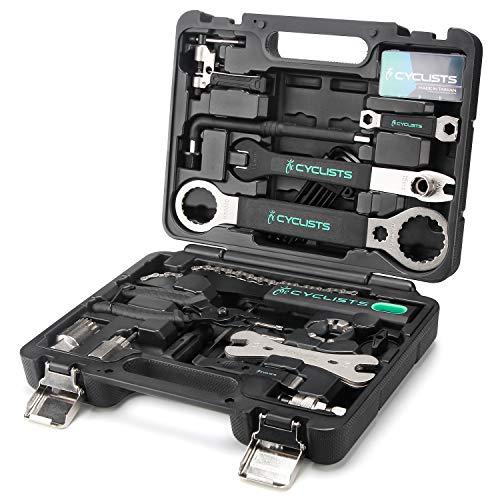
- A charger at home and a tool kit with the right Torx keys for your motor and battery
Frequently asked questions
How far can an electric mountain bike go?
Usually 30–80 km (20–50 miles) of trail riding, depending on battery size, assist mode, terrain and rider weight.
Are eMTBs heavy to ride without power?
Yes, full-power eMTBs are hard to pedal with the motor off. Lightweight eMTBs are much easier.
Are e-bikes allowed on mountain bike trails?
It depends on the trail. Many US public lands allow only Class 1 e-bikes or none at all. Always check local rules.
Is an eMTB cheating?
No. You still pedal, get a good workout and can ride more terrain in the time you have.
Keep reading

Hi, I am Emam Hasan — founder and editor of BrokeMountain. I oversee this blog’s hiking, camping and outdoor gear guides, making sure every article is well-researched, accurate and genuinely helpful for your time on the trail. Enjoy it!