There is a distinct moment on every backcountry journey when legs grow heavy and energy wanes. After miles over rocky switchbacks, filtering water, and setting up camp, the simple desire for a comfortable place to sit becomes paramount.
For many backpackers, the choice often comes down to sitting on a cold rock, a damp log, or directly in the dirt. While commercially manufactured trail chairs are available, an increasingly popular and environmentally conscious alternative is the upcycled backpacking chair.
Upcycled trail seating repurposes discarded, vintage, or salvaged materials to create functional outdoor equipment. Rather than relying entirely on new manufacturing, outdoor enthusiasts can breathe new life into existing frames, fabrics, and hardware.
This approach combines hands-on utility with environmental stewardship. It offers a customized way to relax at camp while minimizing personal ecological impact.
What Upcycling Means for Trail Seating
In the context of outdoor equipment, upcycling is the process of taking worn, damaged, or discarded items and transforming them into functional gear of equal or higher utility. While industrial recycling often breaks materials down into raw ingredients, upcycling retains the core structural integrity of existing items and adapts them for new uses.
When applied to trail seating, upcycling involves taking components from old lawn chairs, broken camp furniture, salvaged webbing straps, or leftover heavy-duty outdoor textiles and re-engineering them into a portable seat.
It is important to understand that an upcycled backpacking chair is not a single, standardized, off-the-shelf product with fixed dimensions or factory-tested load guarantees. Instead, upcycling represents a practical philosophy and a versatile set of DIY techniques.
An upcycled chair might take the form of a refurbished vintage aluminum folding frame that has been re-webbed with durable cotton tape. It might also be a lightweight collapsible seat made by pairing salvaged frame poles with a custom-sewn ripstop seat panel.
By viewing discarded gear as a valuable pool of raw materials rather than garbage, backpackers can craft functional camp seating tailored to their individual needs, posture preferences, and packing styles.
Why Reusing and Restoring Chairs Matters
Choosing to restore or upcycle outdoor gear offers significant environmental and practical advantages. Every piece of new outdoor equipment requires raw material extraction, energy-intensive manufacturing, chemical treatments, and long-distance transportation.
When camp chairs wear out, fade, or suffer minor structural damage, they are frequently discarded, even though major elements such as metal frame tubes or intact hardware remain entirely functional. Aluminum and steel frame components, in particular, can endure years of outdoor exposure long after synthetic seat fabrics have degraded under ultraviolet sunlight.
Reusing and restoring chairs directly addresses this problem by keeping durable materials out of landfills and reducing the overall demand for new manufacturing. Replacing a worn fabric sling or swapping out a loose joint fastener restores a chair to full usability without generating additional industrial waste.
Beyond the immediate environmental benefits, gear restoration fosters a circular economy mindset within the outdoor community. Backpackers who learn to inspect, clean, and repair their own equipment build valuable practical skills and self-reliance.
Rather than treating gear as disposable items to be replaced every few seasons, outdoor enthusiasts develop an appreciation for gear maintenance, keeping functional items in active service for years to come.
How to Choose a Sustainable Trail Chair
Selecting or designing a sustainable chair for backpacking requires balancing several key factors. This ensures the seat is useful, durable, and manageable on real wilderness trips.
Because upcycled chairs rely on varied reclaimed materials, understanding how individual elements affect trail performance is essential.
Weight Considerations
When carrying all your supplies on your back, total pack weight is a constant consideration. For backpacking, chair materials must be selected with weight efficiency in mind.
Hollow aluminum tubing, high-strength synthetic fabric scraps, or lightweight woven tape keep a chair light enough for backcountry travel without sacrificing necessary structural support. Heavy steel frames or solid wooden parts are generally better suited for car camping or backyard use rather than multi-day trail trips.
Packed Size and Collapsibility
A trail chair must fold or break down compactly to fit inside a backpack or attach securely to external lash points. Collapsible frame designs using shock-corded pole sections or flat-folding vintage frames offer excellent packability.
When evaluating an upcycled design, consider how cleanly the frame folds down. Also check whether the fabric seat can wrap around the collapsed poles to form a neat, compact bundle.
Comfort and Ergonomics
Backcountry comfort depends on seat height, width, and overall support. A seat positioned extremely low to the ground can make standing up difficult after a long day of hiking.
A loose or sagging seat creates uncomfortable pressure points. Adjusting fabric tension during construction ensures proper support for the lower back and thighs, allowing tired muscles to rest effectively.
Durability and Resistance
Outdoor environments expose equipment to rough ground, moisture, abrasive dirt, and intense sunlight. Frame materials must resist corrosion and bending, while seat textiles require high tear strength and abrasion resistance.
Using weather-resistant fabrics, durable outdoor thread, and rust-resistant hardware helps the chair withstand repeated exposure to the elements.
How to Assess and Restore a Vintage Folding Chair: Step by Step
Restoring a vintage folding chair is one of the most accessible upcycling projects for outdoor seating. With basic household tools and careful attention to detail, a discarded lawn or camp chair can be converted into a sturdy, dependable piece of gear.
Step 1: Inspect the Frame
Begin with a thorough structural assessment. Carefully examine all metal tubing for cracks, severe dents, deep corrosion, or structural bends that compromise frame integrity.
Inspect all pivot points, brackets, and connecting joints. While surface scuffs and minor cosmetic rust can be cleaned and treated, severely bent or cracked frame tubes indicate metal fatigue and mean the frame is unsafe for use.
Step 2: Clean and Decontaminate
Strip away all old, frayed webbing, torn fabric, or degraded plastic straps. Remove rusted screws, clips, or broken rivets using a screwdriver, pliers, or a drill bit.
Wash the entire frame thoroughly with warm water, mild soap, and a scrub brush to eliminate accumulated dirt, grease, oxidation, and road grit. Ensure the interiors of folding joints are clean so the frame operates smoothly.
Step 3: Repair Hardware and Structure
Inspect all fasteners and joint connections. Tighten loose nuts and bolts using appropriate wrenches or screwdrivers.
If a joint flexes excessively because of a worn or missing rivet, drill out the old hardware and replace it with a stainless steel or aluminum bolt secured with a locknut. Carefully straighten slightly bent leg bars using padded pliers.
If a leg attachment socket is cracked or loose, install a reinforcing leg brace or fit a replacement bracket to restore frame stability.
Step 4: Refinish Metal and Components
Treat surface oxidation or light rust on metal frames using fine-grit sandpaper or steel wool until the metal is smooth. Wipe away all residual dust with a clean, dry cloth.
Apply a rust-inhibiting primer to any exposed bare metal, followed by a durable outdoor-rated protective coat. Smooth down any rough metal edges or burrs around drill holes to prevent them from wearing through new fabric panels.
Step 5: Replace Fabric or Webbing
Measure the frame dimensions to determine the required fabric or webbing coverage. If sewing a synthetic fabric sling, cut the pattern allowing generous seam allowances.
Double-stitch all load-bearing seams and sew reinforced channels for frame poles or plastic splines. If re-webbing the chair with woven cotton tape, seatbelt webbing, or heavy polyester straps, secure each strap firmly across the frame using pop rivets or screws with wide washers.
Maintain firm, uniform tension across both the seat and backrest to prevent premature sagging under weight.
Simple DIY Ideas Using Reclaimed Materials
Upcycling offers creative freedom to transform everyday discarded items into functional trail seating and accessories.
Re-Webbing with Salvaged Straps
Old folding frames with missing or dry-rotted plastic weaving can be restored using reclaimed heavy-duty webbing. Salvaged vehicle seatbelts, heavy cotton twill tape, or durable utility straps make exceptionally strong, weather-resistant seat surfaces.
Weaving the straps in a traditional crisscross basketweave pattern distributes body weight evenly across the frame while creating a distinctive, custom look.
Using Fabric from a Chair That Cannot Be Repaired
When a camp chair frame breaks beyond repair, the fabric seat is often still in excellent condition. High-density canvas or ripstop polyester from broken chairs can be harvested and repurposed into custom trail accessories.
By seam-ripping the old seat, you can salvage durable fabric, functional zippers, mesh cup holders, and padded shoulder straps. These reclaimed components can be sewn into a lightweight sit pad, a gear pouch, or an organizer roll for camp utensils.
Washable Slipcovers for Quick Restorations
If a folding chair seat has minor cosmetic damage, such as small ember burns from a campfire, full disassembly may not be necessary. Sewing a removable, double-layered slipcover out of heavy canvas or durable cotton fabric allows you to slide a protective cover directly over the existing seat.
Securing the slipcover with heavy-duty hook-and-loop fasteners or tie straps makes it easy to remove and machine wash after dusty trips. This extends the chair’s functional life with minimal effort.
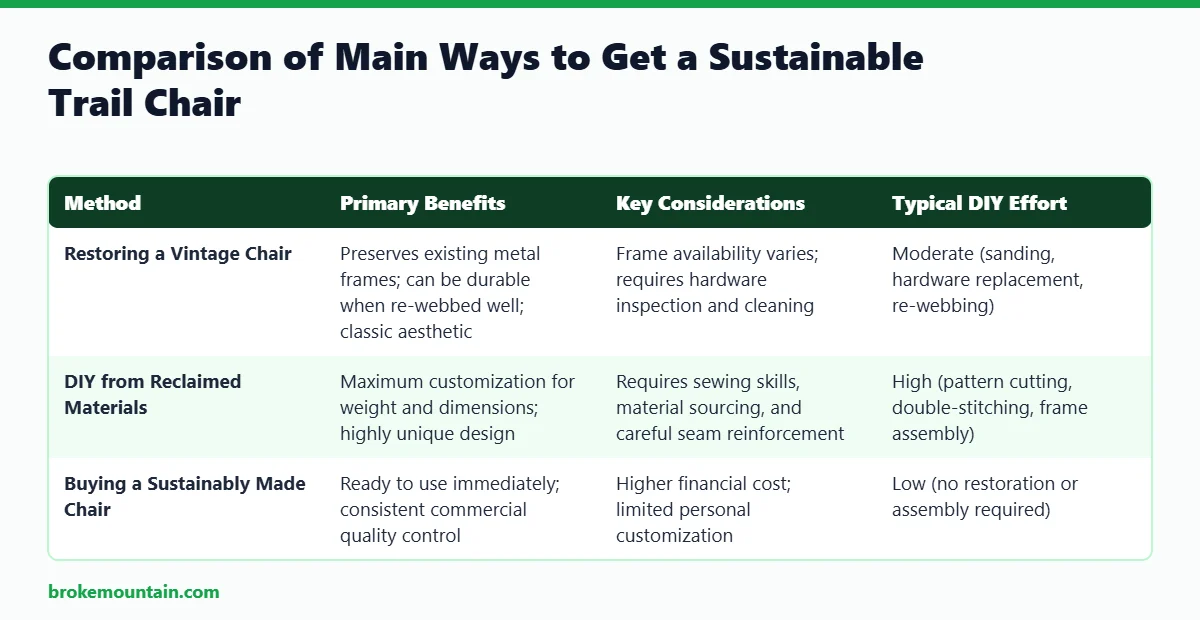
Comparison of Main Ways to Get a Sustainable Trail Chair
| Method | Primary Benefits | Key Considerations | Typical DIY Effort |
|---|---|---|---|
| Restoring a Vintage Chair | Preserves existing metal frames; can be durable when re-webbed well; classic aesthetic | Frame availability varies; requires hardware inspection and cleaning | Moderate (sanding, hardware replacement, re-webbing) |
| DIY from Reclaimed Materials | Maximum customization for weight and dimensions; highly unique design | Requires sewing skills, material sourcing, and careful seam reinforcement | High (pattern cutting, double-stitching, frame assembly) |
| Buying a Sustainably Made Chair | Ready to use immediately; consistent commercial quality control | Higher financial cost; limited personal customization | Low (no restoration or assembly required) |
Care, Safety, and Pre-Trip Testing Tips
Ensuring safety and reliability is essential when using restored or handmade outdoor equipment. Before taking an upcycled chair into the backcountry, follow these practical maintenance and safety practices.
Perform Pre-Trip Load and Stability Tests
Never take a newly restored or built chair directly on a multi-day backcountry trip without testing it first in a controlled setting. Set the chair up on a flat, level surface at home.
Sit down gradually, keeping your body weight centered over the frame. Slowly shift your weight from side to side and lean back gently to evaluate joint flexibility, fastener stability, and stitch tension.
Testing the chair under controlled conditions helps identify any weak points before you arrive at camp.
Inspect Hardware and Seams Before Outings
Prior to every trip, examine all frame bolts, rivets, and pivot pins for signs of loosening or metal fatigue. Inspect fabric seams, especially at high-stress corner pockets and sleeve channels, for fraying thread or fabric stretching.
Practice Weather Protection and Proper Storage
Protect your chair from premature wear by applying a weather-resistant protective spray to fabric panels and a light coat of silicone lubricant to folding hinges. After returning from a trip, brush off mud, grit, and sand from frame joints.
Allow the fabric and metal frame to air dry completely in a well-ventilated area before folding and storing the chair. This helps prevent rust formation and mildew growth.
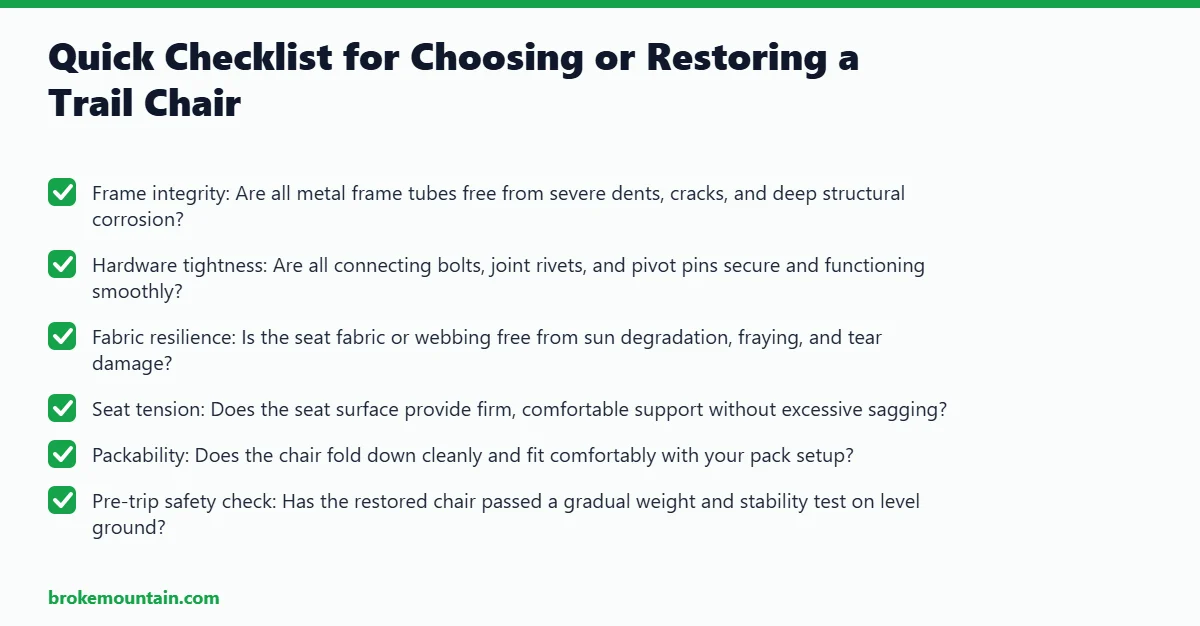
Quick Checklist for Choosing or Restoring a Trail Chair
- Frame integrity: Are all metal frame tubes free from severe dents, cracks, and deep structural corrosion?
- Hardware tightness: Are all connecting bolts, joint rivets, and pivot pins secure and functioning smoothly?
- Fabric resilience: Is the seat fabric or webbing free from sun degradation, fraying, and tear damage?
- Seat tension: Does the seat surface provide firm, comfortable support without excessive sagging?
- Packability: Does the chair fold down cleanly and fit comfortably with your pack setup?
- Pre-trip safety check: Has the restored chair passed a gradual weight and stability test on level ground?
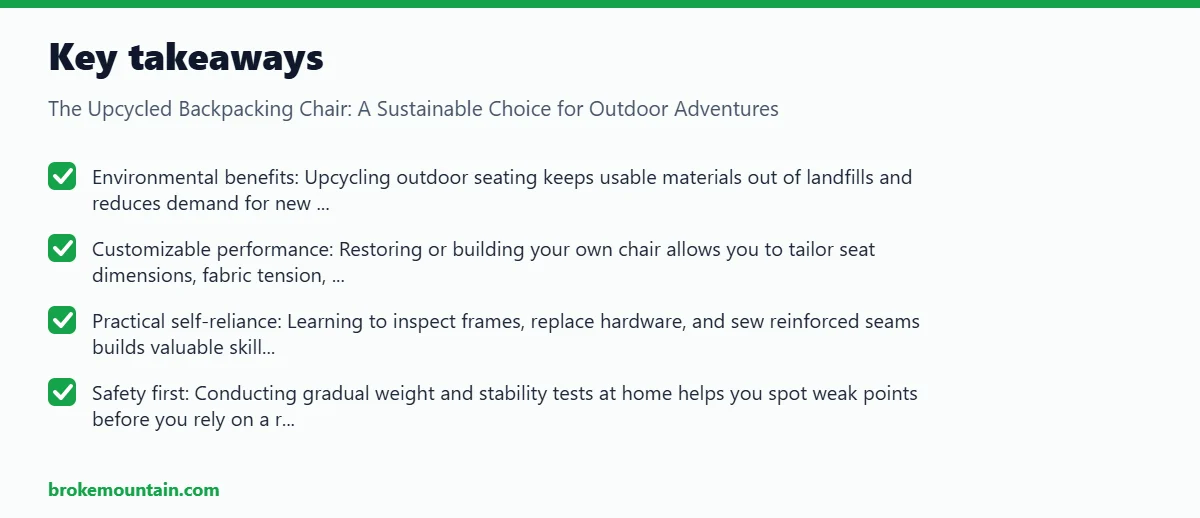
Key Takeaways
- Environmental benefits: Upcycling outdoor seating keeps usable materials out of landfills and reduces demand for new manufacturing.
- Customizable performance: Restoring or building your own chair allows you to tailor seat dimensions, fabric tension, and packability to your preferences.
- Practical self-reliance: Learning to inspect frames, replace hardware, and sew reinforced seams builds valuable skills for gear maintenance.
- Safety first: Conducting gradual weight and stability tests at home helps you spot weak points before you rely on a restored chair at camp.
Conclusion and Next Steps
An upcycled backpacking chair offers a practical, rewarding way to combine outdoor comfort with environmental responsibility. By transforming discarded folding frames, salvaged webbing, or reclaimed fabrics into functional camp seating, you reduce gear waste while gaining a deeper understanding of how your equipment is constructed.
If you are interested in exploring sustainable trail seating, start by taking inventory of materials you already have or can source locally. Look for sturdy vintage folding frames at thrift shops or garage sales, gather reclaimed webbing or durable fabric scraps, and begin planning your custom restoration project.
Taking a well-deserved seat at the end of a long hike feels even better when you restored the chair yourself.

Hi, I am Emam Hasan — founder and editor of BrokeMountain. I oversee this blog’s hiking, camping and outdoor gear guides, making sure every article is well-researched, accurate and genuinely helpful for your time on the trail. Enjoy it!