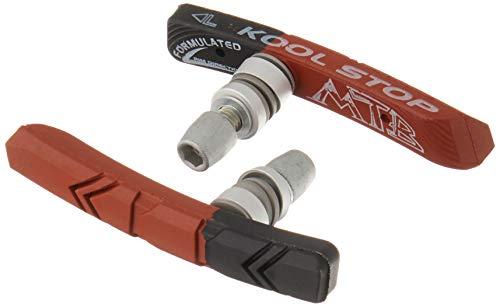
Quick answer: Shimano XT brakes come in two- and four-piston versions, and each takes a different pad. Two-piston XT calipers (BR-M8100 and BR-M8000) use Shimano’s G-type pad, such as the G05S-RX resin or G04S metal pad, plus finned J-type pads. Four-piston XT calipers (BR-M8120 and BR-M8020) use the D-type shape, such as the D03S-RX resin or D02S metal pad, plus finned N-type pads like the N03A. Choose resin for quiet, strong bite in the dry, metal for wet and muddy riding, and finned pads if your brakes get hot on long descents.
BrokeMountain is reader-supported. We may earn a commission when you buy through links on this page, at no extra cost to you. Learn more.
How we chose: we haven’t tested these pads in person. This guide is based on Shimano’s compatibility information as published by retailers, and on general workshop advice. Always match the pad code to the model printed on your caliper.
Which XT brake do you have?
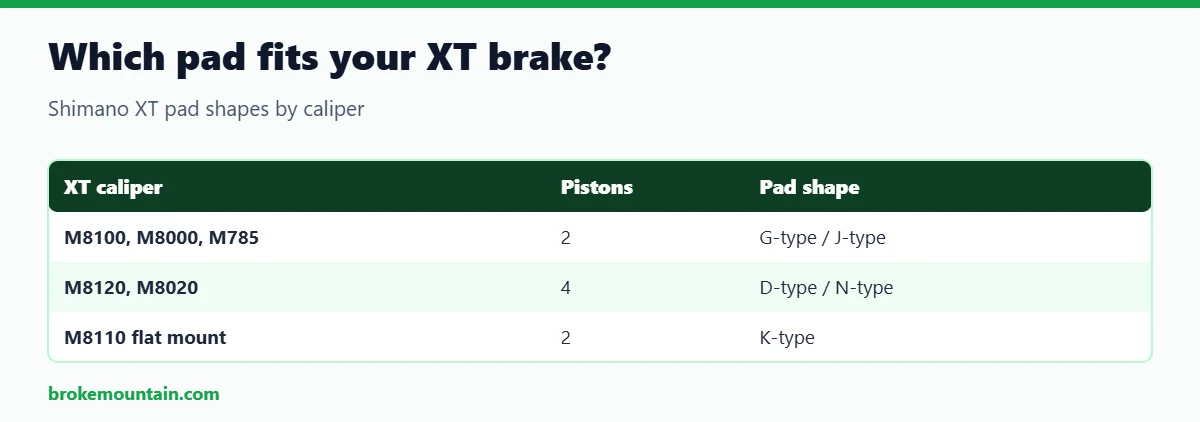
Shimano XT has been through several generations. Look for the code beginning “BR-” on your caliper and use this table:
| XT caliper | Pistons | Pad shape | Example pads |
|---|---|---|---|
| BR-M8100, BR-M8000, BR-M785 | 2 | G-type / J-type (finned) | G05S-RX resin, G04S metal, J04C finned metal |
| BR-M8120, BR-M8020 | 4 | D-type / N-type (finned) | D03S-RX resin, D02S metal, N03A finned resin |
| BR-M8110 (flat mount, gravel/XC) | 2 | K-type | K05S-RX resin |
The last row is easy to miss: XT’s flat-mount caliper, used on some cross-country and gravel bikes, takes Shimano’s road-style K-type pad rather than the mountain bike G-type.
Two-piston XT pads
Two-piston XT brakes share their pad shape with Shimano’s other two-piston mountain bike brakes, from Deore to XTR. Retailer Worldwide Cyclery’s Shimano pad listings show the G05S-RX resin, G04S metal and J04C metal pads as compatible with two-piston XT calipers including the BR-M8100 and BR-M8000. The J-type pads add cooling fins, which help on long descents.
Four-piston XT pads
The four-piston XT shares the D-type pad with Deore, SLX, Saint and Zee four-piston brakes. Parts Europe’s listing for the D03S pad confirms it’s a narrow D-type pad for four-piston calipers, compatible with the XT BR-M8120 and BR-M8020 among others. For riders who need extra heat resistance, the finned N03A resin pad is listed by Universal Cycles as compatible with the BR-M9120, BR-M8120 and BR-M7120.
What are finned pads, and do you need them?
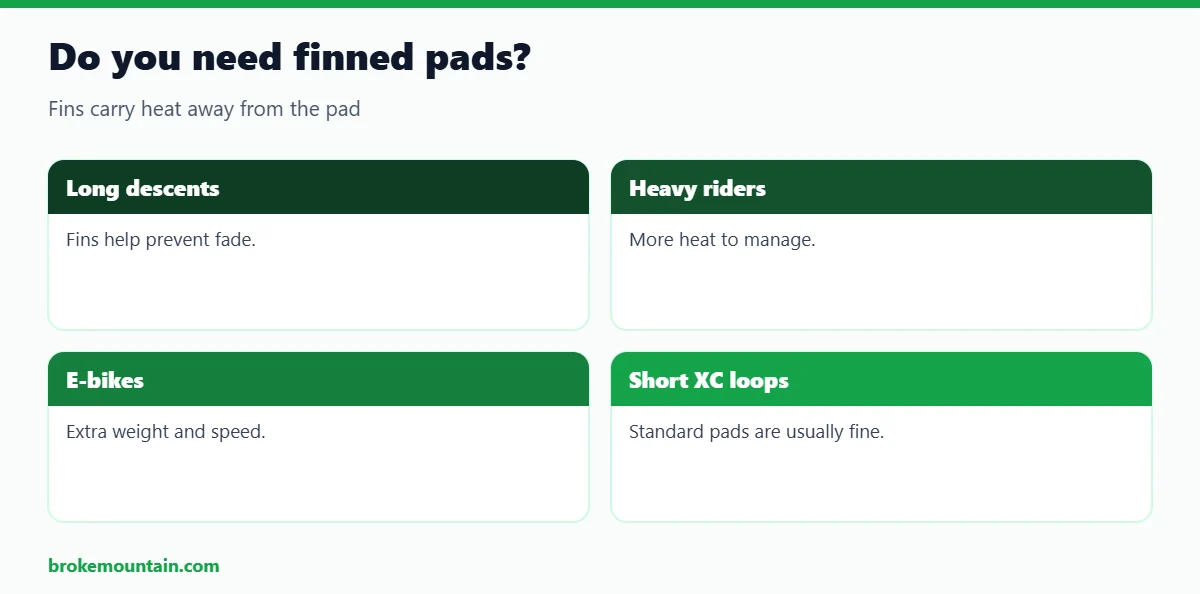
Shimano’s finned pads have aluminium fins on the back of the pad that stick out above the caliper. As air flows over them, they carry heat away from the pad, which helps prevent brake fade and keeps the fluid cooler on long descents. They’re part of Shimano’s approach to heat management on its higher-end brakes.
Finned pads are worth it if you:
- Ride long, steep descents where your brakes get hot.
- Are a heavier rider or ride an e-bike.
- Notice your bite point moving or the lever feel changing as the brakes heat up.
For shorter trails and cross-country riding, standard non-finned pads are usually fine and cheaper.
Resin or metal for XT?
- Resin: quiet, with strong initial bite and a smooth feel. Wears quickly in wet, gritty conditions. Best for dry trails and racing.
- Metal: lasts much longer, copes better with heat and mud, but is noisier. Best for wet climates, gravity riding and e-bikes.
Before fitting metal pads, check your rotors. Some Shimano rotors are marked “resin pads only”, and metal pads will wear them out quickly.
The best brake pads for Shimano XT
1. Shimano N03A finned resin (four-piston): best for trail and enduro
The N03A combines Shimano’s quiet resin compound with cooling fins. For four-piston XT brakes on long, steep descents, it’s a strong all-round choice: good bite and feel with better heat control than standard pads.
- Good for: trail and enduro riders on XT four-piston brakes.
- Watch out for: more expensive than non-finned pads, and still wears faster in mud than metal.
Check Shimano N03A prices on Amazon
2. Shimano D03S-RX resin (four-piston): best value four-piston pad
The D03S-RX is Shimano’s standard non-finned resin pad for four-piston brakes. It’s quiet and smooth, widely available and cheaper than finned pads, which makes it ideal for riders who don’t overheat their brakes.
- Good for: everyday trail riding in dry conditions.
- Watch out for: can fade on very long descents.
Check Shimano D03S prices on Amazon
3. Shimano G05S-RX resin (two-piston): best for XC and light trail
For two-piston XT brakes, often fitted to cross-country and light trail bikes, the G05S-RX is the standard resin pad. It’s light, quiet and fits every Shimano two-piston mountain bike caliper, so spares are easy to find.
- Good for: XC racing and dry trail riding.
- Watch out for: quick wear in wet, gritty conditions.
Check Shimano G05S prices on Amazon
4. Shimano metal pads (D02S, G04S or finned J04C): best for wet and heavy use
Shimano’s metal pads last far longer in mud, rain and grit, and handle heat better. The finned J04C adds cooling to the two-piston metal option. These are the pads to choose for winter riding, e-bikes and riders who wear out resin pads quickly.
- Good for: wet climates, gravity riding and e-bikes.
- Watch out for: extra noise and the need for metal-compatible rotors.
Check Shimano metal pad prices on Amazon
5. Aftermarket pads for XT: compound choice
Brands such as EBC, SwissStop, Galfer and Jagwire make pads in Shimano’s D-type and G-type shapes, often in compounds Shimano doesn’t offer, such as semi-metallic. They’re a good way to fine-tune noise, bite and pad life.
- Good for: riders who want a compound between resin and metal.
- Watch out for: stick to known brands and confirm the listing names your caliper.
Check aftermarket XT pad prices on Amazon
Quick comparison
| Pad | Fits | Type | Best for |
|---|---|---|---|
| Shimano N03A | 4-piston XT | Finned resin | Long descents, trail/enduro |
| Shimano D03S-RX | 4-piston XT | Resin | Value, dry trails |
| Shimano G05S-RX | 2-piston XT | Resin | XC, light trail |
| Shimano D02S / G04S / J04C | 4- / 2-piston XT | Metal (J04C finned) | Wet, e-bikes |
| Aftermarket | D- and G-type | Various | Fine-tuning feel |
XT vs SLX vs Deore: do pads differ?
Within each piston count, Shimano’s mountain bike brakes share pad shapes. A four-piston XT, SLX and Deore all take D-type pads, and their two-piston versions all take G-type pads. The differences between the brake levels are in the levers and calipers, such as lighter materials, extra adjustments and smoother action, not the pads. That makes it easy to share spares between bikes. Our guide to brake pads for Shimano Deore covers the cheaper models in more detail.
Getting the best from XT levers
XT levers offer tool-free reach adjustment and, on most versions, a free-stroke adjuster that changes how far the lever moves before the pads touch the rotor. After fitting new pads:
- Set the reach so you can brake comfortably with one finger.
- Adjust free stroke so the bite point comes in where you want it.
- Check that both brakes feel similar, especially if you’ve changed only one set of pads.
Changing XT pads
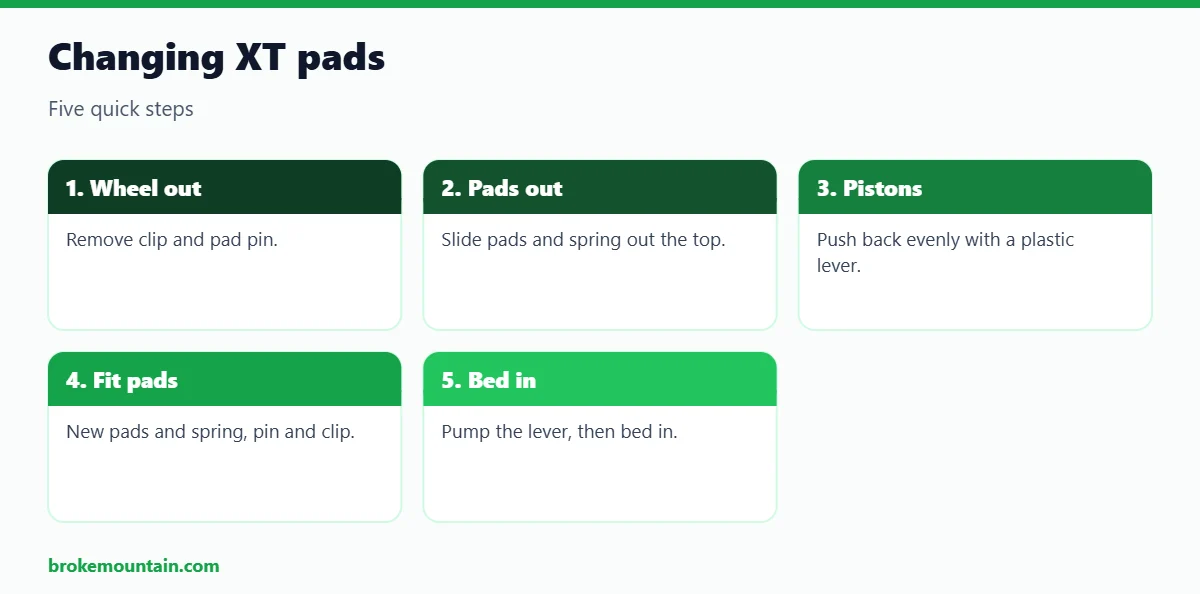
- Remove the wheel and pull out the clip on the pad pin.
- Remove the pin and slide the pads and spring out of the top of the caliper.
- Push the pistons back with a plastic tyre lever. On four-piston calipers, check that all four retract evenly.
- Fit the new pads and spring, with finned pads facing the right way, then refit the pin and clip.
- Refit the wheel, pump the lever and bed in the pads.
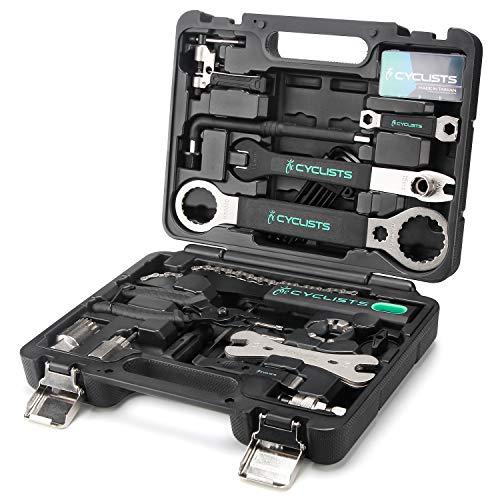
Our guide to mountain bike brake pads explains bedding in, and our tool kit guide covers the tools you’ll need.
Dealing with the XT “wandering bite point”
Some riders notice that Shimano four-piston brakes, including XT, can have a bite point that moves, especially when the brakes are hot or after the bike has been on its side. Common causes are small amounts of air in the system, fluid expanding with heat, or pistons that don’t retract evenly. A careful bleed, clean pistons and finned pads usually improve consistency. If the problem continues, a bike shop can check the caliper and lever.
When to replace XT pads
Replace pads before the friction material wears below about 0.5 mm, and many riders change them at about 1 mm for a firmer lever. Check them every few rides in wet weather, and immediately if you hear grinding. Replace the pad spring at the same time if it’s lost tension or is corroded.
Rotors for XT brakes
XT brakes are often paired with Shimano’s Ice-Tech style rotors, which use a layered construction to help dissipate heat. Bigger rotors add power and heat capacity: many trail riders run 180 or 203 mm at the front. Check rotor thickness against the minimum printed on it, and keep rotors clean, as contamination is the most common cause of noisy, weak brakes.
Setting XT up for racing
XT is a popular choice for cross-country and enduro racing, and pad choice changes with the event. For a dry XC race, light resin pads on two-piston calipers give the best feel and lowest weight. For a muddy race, metal pads are safer, because resin pads can wear down to the backing plate during a single long, gritty event. For enduro racing, with long timed descents, finned pads on four-piston calipers help keep braking consistent from the top of a stage to the bottom. Whatever you race, fit fresh pads a few rides before the event so they’re properly bedded in, rather than on race morning.
Carrying spares on trips
If you’re heading to a bike park, a riding holiday or a multi-day race, pack at least one spare set of pads per brake, plus spare pins, clips and springs. XT pads are widely stocked, but remote areas may not have the right shape in the compound you want. A pad spreader or plastic tyre lever and the right hex key are all you need to change them trailside.
Matching front and rear
Your front brake does most of the stopping, so it wears pads faster and gets hotter. Many riders run finned or metal pads up front and standard pads at the rear, or use a bigger rotor at the front than the back. Check both brakes regularly, because the front often needs pads well before the rear.
Is it time for new rotors or a bleed instead?
New pads don’t fix every braking problem. If your XT brakes still feel weak or inconsistent after fitting fresh, bedded-in pads, look at the rest of the system. A rotor worn below its minimum thickness, a rotor with a blue or dark heat tint, or one that’s warped will reduce power and can cause pulsing. A lever that feels spongy or comes too close to the bar usually means air in the system, which a bleed with fresh mineral oil will fix. Shimano brakes use mineral oil, which is less corrosive and easier to handle than DOT fluid, so bleeding at home is manageable with the right kit and a little patience.
Frequently asked questions
Can I use Deore pads in XT brakes?
Yes, as long as the piston count matches. Four-piston Deore and XT share D-type pads; two-piston models share G-type pads.
Are finned pads worth the extra cost?
For long descents, heavy riders and e-bikes, often yes. For short trails and XC riding, standard pads are usually enough.
Do finned pads fit every XT caliper?
They’re designed for Shimano’s higher-end calipers, but always check the compatibility list for your exact model.
Why do my XT brakes squeal?
Usually contamination or glazed pads. Replace the pads, clean the rotor with isopropyl alcohol and bed in the new pads.
Can I mix resin and metal pads?
Yes, front and rear can use different compounds, for example resin at the front for bite and metal at the rear for durability.
Do XT pads come with a spring?
Many genuine Shimano pad sets include a pad spring. Check the listing, and replace a worn or bent spring when you change pads.
Keep reading

Hi, I am Emam Hasan — founder and editor of BrokeMountain. I oversee this blog’s hiking, camping and outdoor gear guides, making sure every article is well-researched, accurate and genuinely helpful for your time on the trail. Enjoy it!