Quick answer: slick or semi-slick tyres turn a mountain bike into a fast, quiet commuter or gravel bike. Choose the same wheel size as your current tyres (26, 27.5 or 29 inch), pick a width of about 1.5–2.2 inches, and look for puncture protection if you ride on roads. A fully slick tyre is fastest on tarmac; a semi-slick with a smooth centre and small side knobs is the better all-rounder for mixed roads, gravel and dry paths.
BrokeMountain is reader-supported. We may earn a commission when you buy through links on this page, at no extra cost to you. Learn more.
Why fit slick tyres to a mountain bike?
Knobbly MTB tyres are made for grip in dirt, but on tarmac they buzz, wear quickly and waste energy. Swapping to slicks can make an old hardtail feel like a different bike: it rolls faster, holds speed better and is quieter. Many riders keep a second set of wheels or tyres for commuting and switch back to knobblies for the trails.
What to check
Wheel size and the ISO number
Tyre sizes in inches can be confusing, so check the ISO (ETRTO) number on your current tyre sidewall. 26-inch MTB wheels are 559 mm, 27.5-inch are 584 mm and 29-inch are 622 mm. The new tyre must match this bead seat diameter exactly.
Width
Narrower tyres (1.5–1.75 in) are fastest on smooth roads. Wider ones (2.0–2.2 in) are more comfortable, handle potholes and gravel better and still roll far better than knobblies. Check that a wider tyre clears your frame and fork, and that your rim width suits it.
Tread type
| Tread | Best for | Trade-off |
|---|---|---|
| Full slick | Roads, bike paths, commuting | Little grip on loose dirt or wet grass |
| Semi-slick | Mixed roads, gravel, dry paths | Slightly slower than a full slick on tarmac |
| Light file tread | Hardpack and gravel | Less grip than knobblies on mud |
Puncture protection
City and commuting tyres often add a protective belt under the tread. It adds a little weight but saves a lot of roadside repairs. Tyre liners and sealant (if your rims and tyres are tubeless-ready) add more protection.
Pressure range
Slicks run higher pressures than trail tyres. Check the range printed on the sidewall; for a 2.0-inch slick, 40–60 psi is typical depending on your weight.
Our picks


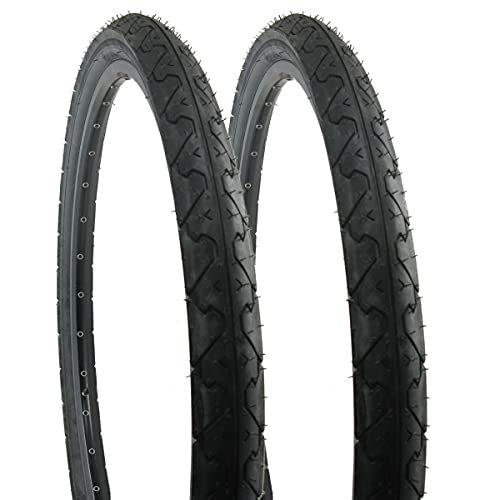
We picked these based on size options, tread design, puncture protection, sidewall pressure ranges and how riders rate them for speed and durability on mixed surfaces. Kenda’s City Slick and the WTB Slick are well-known names; Fincci and other budget pairs are good value if you just want a smoother, faster commute on an old mountain bike.
Fitting tips
- Use tyre levers carefully to avoid pinching the tube.
- Check the rotation arrow on the sidewall before inflating.
- Inflate slowly and check the bead line sits evenly all the way around.
- You may need narrower inner tubes if you go much narrower than your old tyres.
Frequently asked questions
Will slick tyres make my mountain bike faster?
Yes, noticeably on roads. Rolling resistance drops and the bike holds speed more easily.
Can I ride trails on slick tyres?
Dry, smooth paths are fine. Mud, wet roots and loose gravel are not, because there are no knobs to bite.
Do I need new tubes?
Only if the new tyre is much narrower than the old one. Tubes have a size range printed on the box.
Keep reading

Hi, I am Emam Hasan — founder and editor of BrokeMountain. I oversee this blog’s hiking, camping and outdoor gear guides, making sure every article is well-researched, accurate and genuinely helpful for your time on the trail. Enjoy it!