Quick answer: when it comes to walking boots vs hiking boots, walking boots are generally lighter and more flexible, and they’re made for well-kept paths and gentle hills. Hiking boots are stiffer and more supportive, with grippier soles, for rough, steep or rocky trails and heavier packs. The two terms overlap a lot, and in the UK “walking boots” often means what Americans call hiking boots.
If you’re shopping for outdoor footwear, the labels can be confusing. One brand’s “walking boot” is another brand’s “light hiking boot”, and outdoor shops in different countries use the words differently. The useful question isn’t what a boot is called. It’s how the boot is built and whether that construction suits the ground you walk on, how far you go and how much you carry. This guide explains the real differences and how to choose.
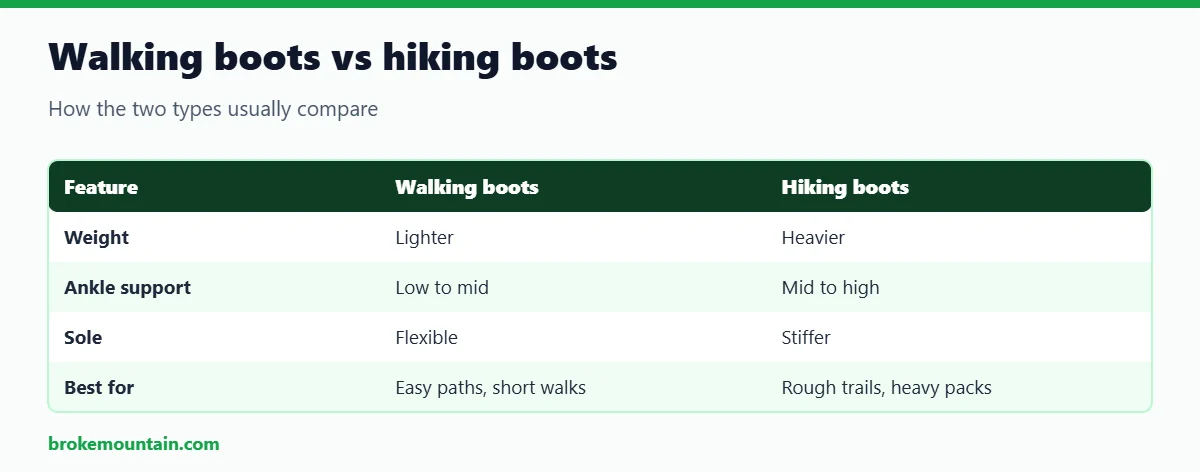
Walking Boots vs Hiking Boots at a Glance
| Walking boots | Hiking boots | |
|---|---|---|
| Weight | Lighter | Heavier |
| Flexibility | More flexible sole | Stiffer sole for rough ground |
| Ankle support | Moderate | Higher, especially in mid and high cuts |
| Grip | Good on paths | Deeper lugs for mud, rock and scree |
| Break-in time | Short or none | Longer, especially for leather boots |
| Best for | Parks, paths, countryside walks | Mountains, rough trails, multi-day trips |
Why the Names Get Confusing
In the United States, “hiking boot” is the everyday term for any sturdy outdoor boot, and “walking boot” is rarely used. In the UK and much of Europe it’s the other way round: people go “hillwalking” in “walking boots”, and many of those boots are just as sturdy as American hiking boots. Some brands also sell “trekking boots” or “mountain boots”, which usually means something stiffer still for heavy loads and steep, rocky ground.
A more reliable way to sort footwear is the rough scale described in Wikipedia’s overview of hiking boots. It runs from light trail shoes for dry, well-kept paths, through higher-cut “trail hikers” for mud and steeper slopes, to sturdy mountain boots that can take crampons. Most “walking boots” sit at the lighter end of that scale and most “hiking boots” in the middle, but there is plenty of crossover.
How the Construction Differs
Upper
Walking boots usually have synthetic fabric or a fabric-and-suede mix. That makes them light and quick to break in, but less durable on abrasive rock. Hiking boots more often use thicker leather or reinforced synthetics, with a rubber rand around the toe and sides to protect against scrapes.
Midsole and shank
This is where the biggest difference lies. Many hiking boots have a stiff plate, called a shank, built into the sole. It stops the boot bending over sharp rocks and spreads the load when you carry a heavy pack. Walking boots often have a softer midsole and little or no shank, so they feel comfortable straight away but give less protection on rough ground.
Outsole
Hiking boots tend to have deeper, more widely spaced lugs that bite into mud and loose scree and shed dirt as you walk. Walking boots have shallower tread that works well on paths, grass and gravel, and wears more quietly on pavement.
Cut and ankle support
Both types come in low, mid and high cuts. A higher cut with firm lacing gives more stability on uneven ground and keeps out stones and water, but it doesn’t make you immune to ankle sprains. Strength, balance and watching your footing matter too. If ankle support is a priority, see our guide to hiking boots for ankle support.
Waterproofing
Many boots of both types now use a waterproof-breathable membrane such as Gore-Tex. A membrane keeps puddles and wet grass out, but it makes boots warmer and slower to dry if water gets in over the top. In hot, dry places, a non-waterproof boot can be more comfortable. To keep leather or fabric boots shedding water, see how to waterproof hiking boots.
Which Should You Choose?
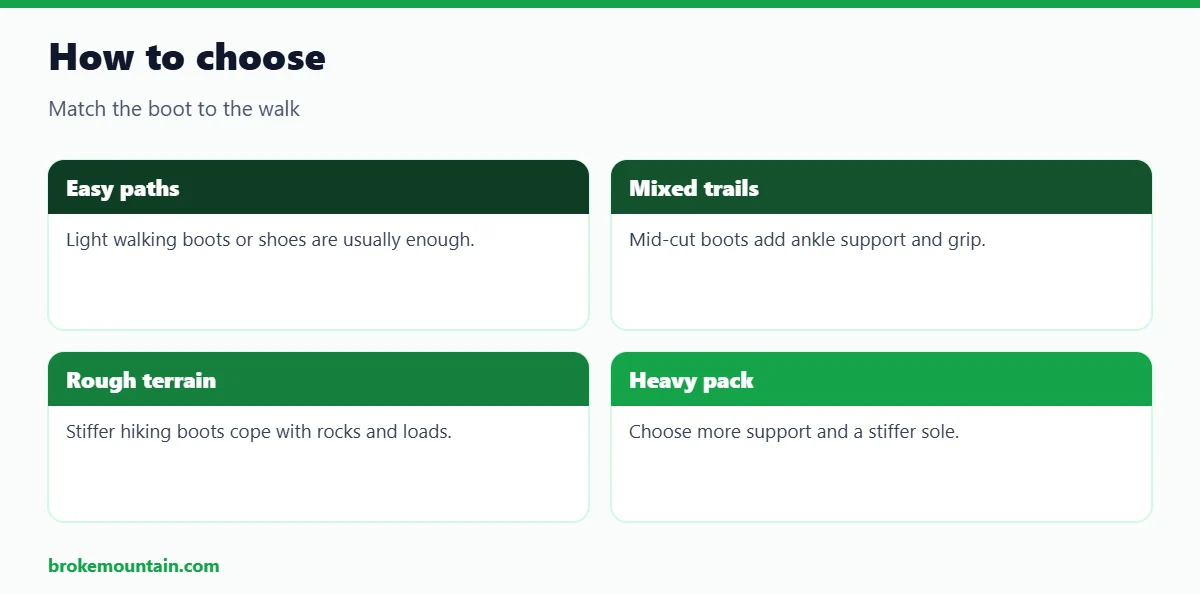
The choice between walking boots vs hiking boots comes down to the ground you walk on and the weight you carry.
- Mostly flat paths and short walks? Walking boots or hiking shoes.
- Hills, uneven ground or longer days? Mid-weight hiking boots.
- Mountains, scrambling or a heavy pack? Stiffer, high-cut hiking or trekking boots.
- Fast, light hikes on dry trails? Many hikers use trail runners; see can you use running shoes for hiking.
Think about the hardest walking you’ll do regularly, not the easiest. A boot that’s perfect for a riverside path can feel flimsy on a rocky descent, while a stiff mountain boot is tiring and clumsy on a gentle country walk.
Weight: Lighter Isn’t Always Better
Lighter footwear takes less effort to lift with every step, which adds up over a long day, and it’s why many experienced hikers have moved to lighter boots and shoes. The trade-off is protection: a light, flexible sole lets you feel sharp rocks, and a soft upper wears out faster. Heavier boots make sense when you carry a big pack, walk on very rough ground or need warmth in cold conditions. We cover this in more detail in should hiking boots be heavy or light.
What Matters Most: Fit
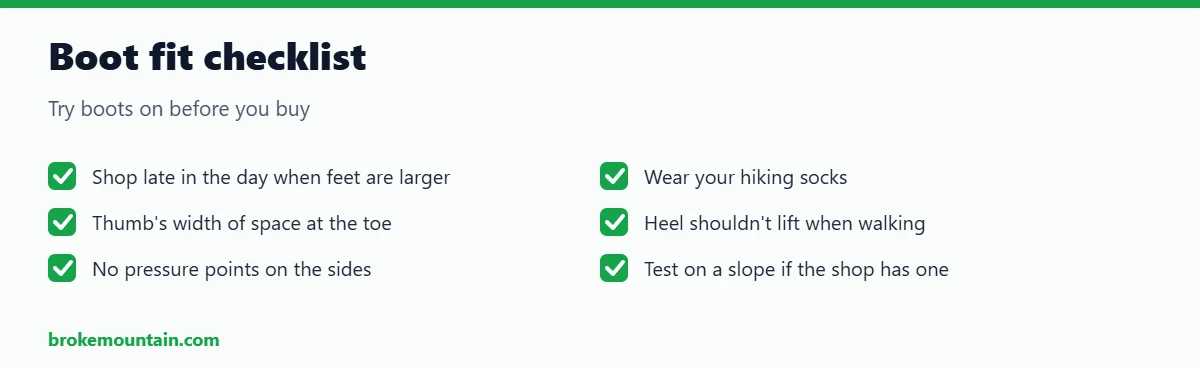
Whatever you call them, fit matters more than the label. A well-fitting walking boot beats a badly fitting expensive mountain boot every time. A few rules:
- Try boots on late in the day, when your feet are slightly swollen, and wear the socks you’ll hike in. Cushioned merino hiking socks are a popular choice.
- Your heel should stay put when you walk, and your toes shouldn’t touch the front of the boot when you walk downhill.
- Lace firmly over the instep so your foot doesn’t slide forward on descents.
- Give stiffer boots time to break in on short walks before a big trip; see how to break in hiking boots.
For a full checklist, read how hiking boots should fit.
Don’t Forget the Rest of Your Kit
Good boots are only part of being ready for the trail. On anything longer than a stroll, carry the basics too. The US National Park Service’s Ten Essentials list covers navigation, sun protection, extra clothing, a light, first aid, fire, a repair kit, food, water and emergency shelter. Our list of what to bring when you go hiking puts it into practice.
FAQ
Can I use walking boots for hiking?
On easy and moderate trails, yes. That’s the key point in the walking boots vs hiking boots question. For rocky, steep or multi-day hikes with a heavier pack, a sturdier hiking boot gives more protection and support.
Are walking boots waterproof?
Many are, with a waterproof membrane, but not all. Check the specs, and remember that a membrane can’t stop water that comes in over the top of the boot.
Are hiking boots heavier than walking boots?
Usually, yes, because of the stiffer soles, shanks and extra protection. See heavy vs light boots.
Can I wear hiking boots for everyday walking?
You can, though stiff soles can feel clunky on pavement. Lighter walking boots or hiking shoes are usually more comfortable around town. See are hiking boots good for everyday use.
How long do walking and hiking boots last?
It depends on how much you use them and the ground you walk on. See how long hiking boots last for the signs it’s time to replace a pair.
Related: Boots for ankle support · Breaking in boots · Hiking shoes for wide feet

Hi, I am Emam Hasan — founder and editor of BrokeMountain. I oversee this blog’s hiking, camping and outdoor gear guides, making sure every article is well-researched, accurate and genuinely helpful for your time on the trail. Enjoy it!