Quick answer: the easiest ways to shower while camping are a solar shower bag hung from a branch, a rechargeable pump shower that draws from a bucket, a pump-up pressure shower, or the campground’s own showers. Add a privacy shelter and a mat to stand on, use very little soap, and wash at least 200 feet (60 m) from lakes and streams. On short trips, a cloth wash or wipes do the job.
BrokeMountain is reader-supported. We may earn a commission when you buy through links on this page, at no extra cost to you. Learn more.
How we put this together: this guide is based on published hygiene and Leave No Trace guidance and on how each type of camp shower is designed to work. We have not tested specific shower products in person.
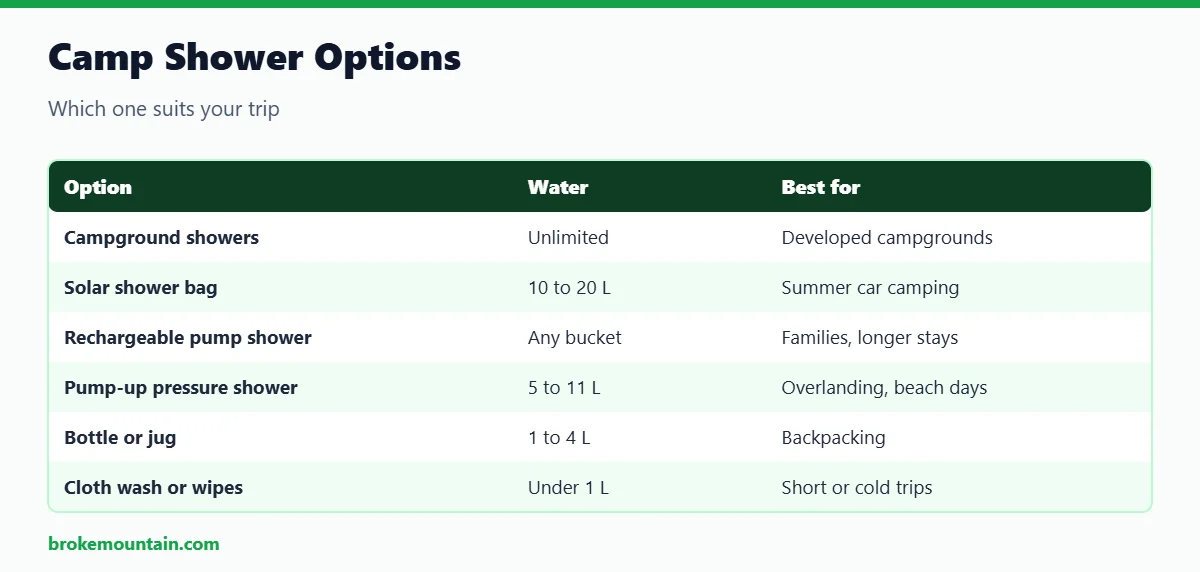
How to shower while camping: your options
| Option | Typical water | Pros | Cons | Best for |
|---|---|---|---|---|
| Campground showers | Unlimited | Hot water, no gear | Not at every site; may need coins | Developed campgrounds |
| Solar shower bag | 10 to 20 litres | Cheap, light, heats in the sun | Needs sun and a strong hanging point | Summer car camping |
| Rechargeable pump shower | Any bucket | Steady flow, no hanging | Needs charging | Families, longer stays |
| Pump-up pressure shower | 5 to 11 litres | No battery, good pressure | Bulkier, needs pumping | Overlanding, beach days |
| Bottle or jug shower | 1 to 4 litres | Free, very light | Short rinse only | Backpacking |
| Cloth wash or wipes | Under 1 litre | Works anywhere | Not a full wash | Short trips, cold weather |
Campground showers
Check before you book. Many developed campgrounds have showers, often coin or token operated with a time limit, so bring change, flip-flops and a small bag for your things.
Solar shower bag
A dark bag with a hose and a small shower head. Fill it in the morning, lay it flat in direct sun, and hang it above head height when you are ready. Water is heavy, about 1 kg per litre, so a full 20-litre bag needs a solid branch or a vehicle roof rack. Always test the temperature on your wrist first: a bag left in strong sun can get hotter than is comfortable.
Rechargeable pump shower
A small submersible pump sits in a bucket and pushes water up a hose to a shower head. You can mix in a kettle of hot water to get the temperature right, which makes it the simplest way to have a warm shower on a cloudy day.
Pump-up pressure shower
A tank you pressurise by hand or foot, like a garden sprayer. It gives good pressure with no battery and is handy for rinsing sand, mud, dogs and dishes as well.
Check portable camping showers on Amazon
What you need
- Your shower of choice and a full water container
- A shower shelter, tarp or swimwear for privacy
- A mat, wooden slats or flip-flops to keep your feet out of the mud
- A small bottle of biodegradable soap
- A quick-dry towel and clean clothes in a dry bag
- A pot and stove if you want to add hot water
How to set up a camp shower, step by step
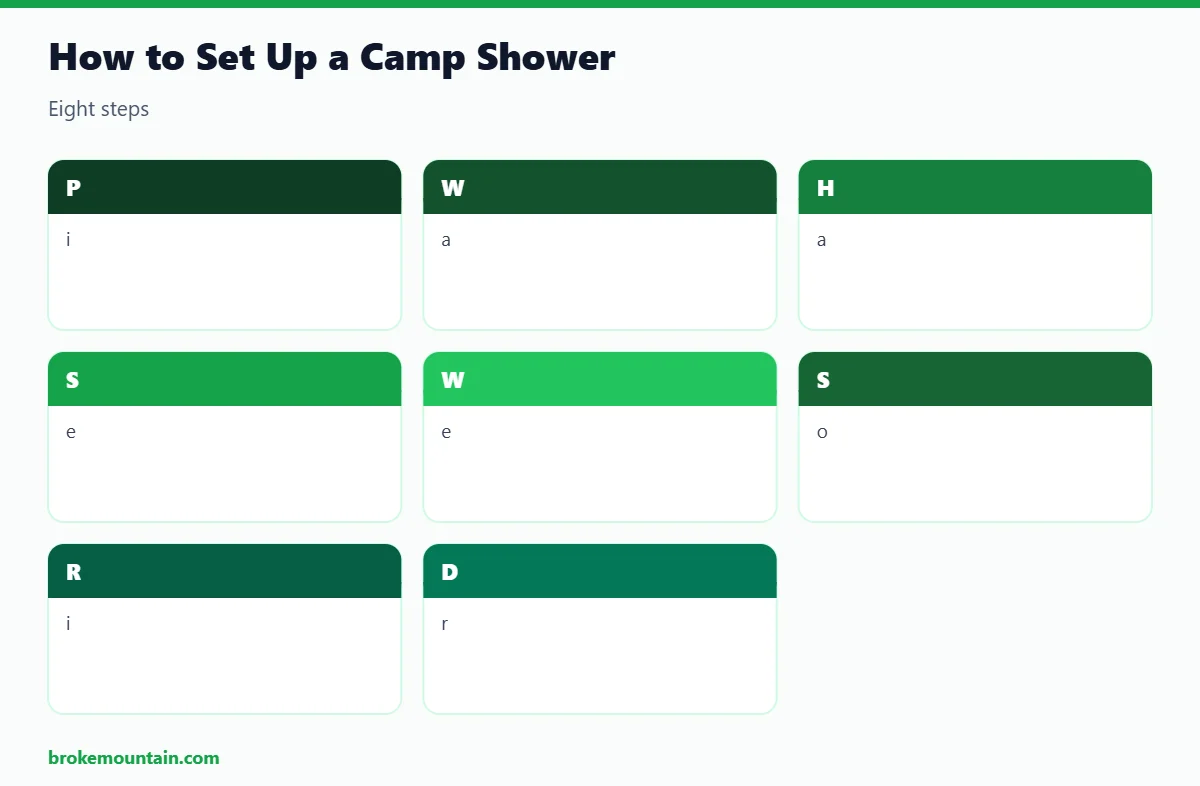
- Pick the spot. Choose well-drained ground at least 200 feet from any lake, stream or spring, and away from your tent and cooking area.
- Warm the water. Use the sun, or mix one part boiling water with about three parts cold and test it.
- Hang or place the shower. Above head height for a gravity bag; on the ground for a pump.
- Set up privacy and put your mat down.
- Wet yourself, then turn the water off.
- Soap up with a small amount of soap.
- Rinse from the top down and turn the water off again.
- Dry off, dress, and hang the bag open to dry.
How to make the water last
A wet-soap-rinse shower uses far less than a running one. With the water off while you lather, most adults can wash properly with 5 to 8 litres, and a rinse without hair washing takes less. Wash hair less often, use a pump or spray head rather than an open hose, and catch warm-up water for dishes.
Leave No Trace when you wash
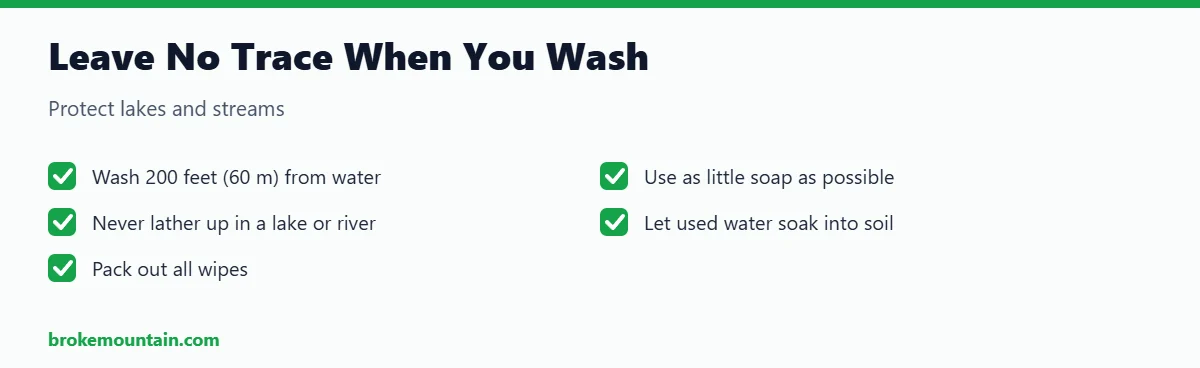
Soap is the main problem. Guidance summarising the Leave No Trace principles warns that even biodegradable soap can harm the water quality of lakes and streams, so the advice is to use as little as possible, wash 200 feet from the shore and rinse with water carried in a pot or jug. Outdoor Life adds the reason: biodegradable soap needs soil to break down, so it does not degrade in open water.
- Never lather up in a lake or river, even with biodegradable soap.
- Let used water soak into soil and spread it out so it does not form a muddy pool.
- At developed campgrounds, ask the host where wash water should go.
- Pack out wipes. They do not break down, whatever the packet says.
Staying clean without a shower
Alberta Health Services suggests no-rinse bath and shampoo products or wet wipes when you have no biodegradable soap, with the wipes carried out afterwards. A simple routine works well:
- Wash face, underarms, groin and feet each evening with a wet cloth.
- Keep one set of clothes only for sleeping.
- Clean hands before eating and after the toilet, with soap and water or sanitiser.
- Swim without soap where swimming is allowed, then towel off.
- Air your feet and change socks daily.
Common mistakes
- Hanging a full bag from a thin branch. Twenty litres weighs about 20 kg. Use a thick limb or part-fill the bag.
- Not testing the temperature. Sun-heated bags and stove-heated water can both be too hot.
- Showering next to the tent. The ground turns to mud and stays damp.
- Leaving the bag full overnight. Empty it, hang it open and let it dry, or it will smell.
- Forgetting dry clothes. Put them within reach before you start.
If you are working out how to shower while camping with children, a pump shower and a large tub is the easiest setup: they can stand in the tub, and the warm water is reused for rinsing feet.
Showering in cold weather
Shower in the warmest part of the afternoon, out of the wind, with dry clothes and a towel within arm’s reach. Keep it short, dry your hair fully and put a hat on. If it is close to freezing, a warm cloth wash inside the tent is safer than a full shower.
Frequently asked questions
How do solar showers heat up?
The dark bag absorbs sunlight. Leave it flat in direct sun for a few hours and test the temperature before use.
How much water do I need for a camp shower?
About 5 to 8 litres per person if you turn the water off while soaping.
Do I need a shower tent?
No, but it gives privacy at busy sites, blocks wind and doubles as a changing room and toilet tent.
Can I use normal shampoo?
At a campground with drains, yes. In the backcountry use a small amount of biodegradable soap and keep it away from water sources.
Is it safe to wash in a lake or river?
A swim without soap is fine where swimming is allowed. Do not use soap in the water.
Keep reading
- Best camping shower shelters
- Portable camping sinks
- How to wash dishes while camping
- Camping water containers
Last checked: November 2026.

Hi, I am Emam Hasan — founder and editor of BrokeMountain. I oversee this blog’s hiking, camping and outdoor gear guides, making sure every article is well-researched, accurate and genuinely helpful for your time on the trail. Enjoy it!